.avif)
TL;DR
LinkedIn Live broadcasts generate up to 24 times more comments and 7 times more reactions than native video, which makes webinars one of the strongest engagement formats on the platform right now.
You need at least 150 followers or connections and an account that's 30+ days old to get approved for LinkedIn Live.
Once you're in, connect a LinkedIn Event to LinkedIn Live through a partner like StreamYard or Restream, turn on the built-in registration form to capture attendee data, and promote it through organic posts, paid ads, LinkedIn groups, and your own team's network.
The webinar itself is only half the job. Filling the seats is the other half, and that's where most B2B teams struggle.
Online webinars have become a normal part of B2B marketing over the past few years, and LinkedIn built a version of its own. This piece walks through how to set one up on LinkedIn, get people to show up, and turn attendees into pipeline.
Why Are LinkedIn Webinars Getting So Much Traction?
That 24x-and-7x gap from the numbers above isn't a small one. It's the difference between a post that gets a handful of likes and one that turns into an actual conversation in your comments.
Live video works because it's happening in real time. People know they can ask a question and get an answer on the spot, and that changes how they engage compared to scrolling past a pre-recorded clip.
B2B companies already know this. They spend real money on webinar funnels, landing pages, and ads just to fill the room.
The work doesn't stop once the webinar ends, either. What you do with the leads afterward matters just as much as the event itself.
Webinars and virtual events also keep showing up near the top of B2B content marketing surveys year after year, right alongside in-person events, as one of the more reliable formats for engagement and lead generation.
But none of that matters if nobody shows up. The companies that consistently pull in solid webinar attendance treat it as part of a bigger promotional plan, not a one-off post the day before the event.
Why Host a Webinar on LinkedIn Specifically?
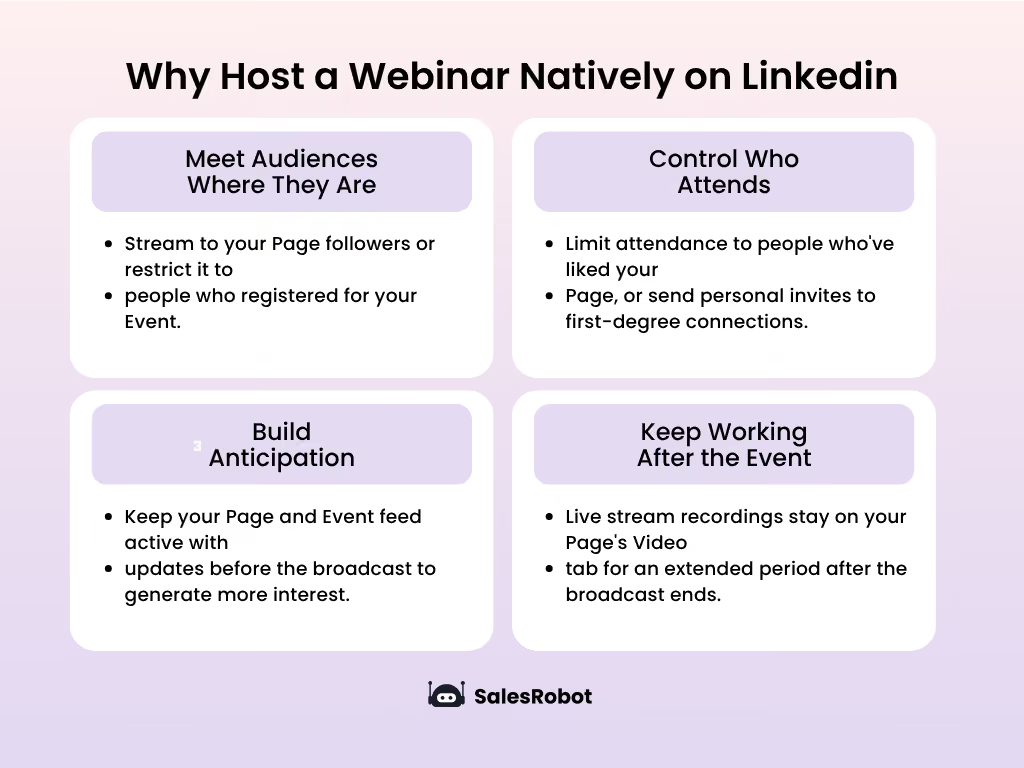
LinkedIn has laid out a few reasons pages should consider hosting their webinars natively on the platform instead of bouncing people to Zoom or a third-party tool:
You can stream to your Page followers or restrict it to people who registered for your Event, which means you're meeting your audience where they already spend time instead of asking them to open another app.
You can also lock attendance down to people who've liked your Page, or send personal invites to your first-degree connections, so the room is filled with people who actually have some context on who you are.
Keeping your Page and Event feed active with updates before the broadcast builds anticipation, and any live stream you run stays available on your Page's Video tab afterward, so it keeps working for you long after the live session wraps.
None of this costs much to set up either. That's part of the appeal.
How to Actually Set One Up
Before you can go live, your LinkedIn Page needs to apply for and get approved for LinkedIn Live.
The requirements:
The two baseline numbers are 150 followers or connections and an account that's at least 30 days old. Below either threshold, you won't qualify for review.
LinkedIn also wants to see a recent history of posting original content and staying active in your community, things like replying to comments and engaging with other people's posts. You'll need to be in good standing under LinkedIn's Professional Community Policies too.
One more thing worth flagging: LinkedIn Live isn't available to members or Pages based in mainland China.
Once you're approved, there are two ways to run the broadcast. Either build a LinkedIn Event and mark it "online-only," or open your third-party streaming tool on the day of the event and point the stream at the Event instead of your Page.
LinkedIn's current preferred broadcast partners are Restream, StreamYard, Socialive, Switcher Studio, and Vimeo. If you're more advanced and want to go direct, you can connect through custom RTMP using OBS or Zoom instead.
Everyone who registered gets a notification the moment you go live, which is one less thing you have to manage manually.
Picking the Right Time to Go Live
Check the Followers section in your Page's Analytics before locking in a date.
It'll show you where your audience is located, which is useful if a chunk of your followers are in a different time zone than you.
Note: As of June 22, 2026, you can no longer go live spontaneously on LinkedIn. Every broadcast now needs to be scheduled as an Event ahead of time. You can still get close to that real-time, in-the-moment feel by scheduling the Event just a few minutes before you actually go live.
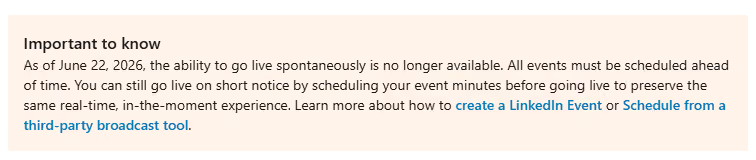
If you're connecting through RTMP with a tool like OBS, the same rule applies. You'll need an Event scheduled first, even if it's only scheduled minutes ahead.
Why LinkedIn Works So Well for Webinar Promotion
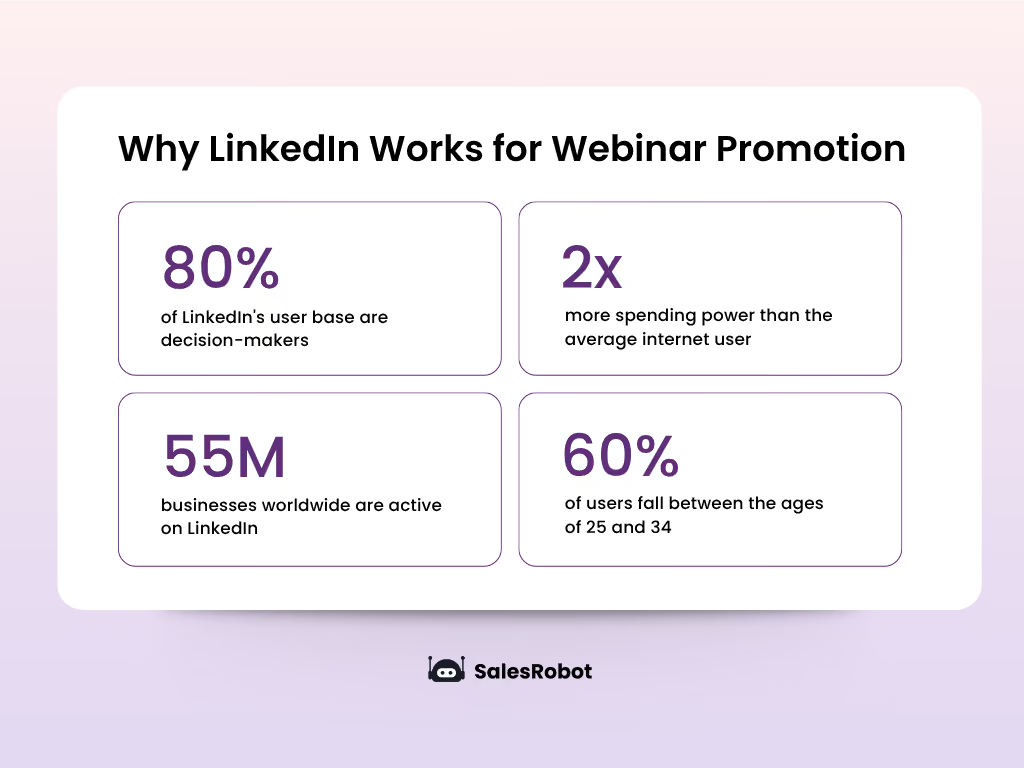
Roughly 80% of LinkedIn's user base is made up of actual decision-makers, which is a big part of why B2B marketers keep coming back to the platform for webinar registrations.
Getting their attention takes more than a generic invite post. Write from the audience's point of view.
What are they dealing with right now, and how does your webinar actually help? Try a few different titles before you settle on one, and see which version explains the topic most clearly.
LinkedIn users also tend to have more spending power than the average internet user, roughly double, according to LinkedIn's own data. If your promotion is genuinely useful and not just a sales pitch dressed up as an invite, that audience tends to respond.
A few ground rules before you start posting:
Pick topics that solve real problems your audience is actually dealing with, not abstract ones. Write like a person, not a brand account.
Skip the "Thou Shalt Attend" tone entirely. Nearly 60% of LinkedIn's users fall between 25 and 34, and that group can smell corporate copy from a mile away.
Write your headline and description with a specific audience in mind, marketers, COOs, CEOs, whoever it actually is. Always include a clear call to action, both on your banner and in the post copy itself.
Here's a number worth sitting with: if even 1% of the roughly 55 million businesses worldwide care about what you're offering, that's still half a million potential companies to market your webinar to.
Five Ways to Promote a LinkedIn Webinar
There's no shortage of "growth hacks" floating around for webinar promotion, but most of them fall into one of five buckets.
1. Give the Webinar Its Own Event Page
A dedicated Event page adds credibility that a regular post can't match. It also gives you a place to run pre-event activity like polls, AMAs with your speakers, or reminder posts, so people stay warmed up before the broadcast even starts.
Here's the actual process:
Go to your company's LinkedIn Page and click the arrow in the upper right corner to open the admin tools. Select "Create an event" from the dropdown.
You'll be prompted to fill in the event details next.
Write a title that immediately tells people who this is for. "[LinkedIn Webinar] How B2B Marketers Can Generate Quality Leads from LinkedIn" does a lot more work than something generic like "LinkedIn Webinar on Lead Generation."
The first version tells a very specific person that this event was made for them. Keep it under 75 characters.
Fill in the date, time, session length, a short synopsis, and your presenter's profile. Write a description that covers the key takeaways and questions the session will answer.
Turn on the "Use a LinkedIn registration form" checkbox. This lets LinkedIn collect registrant info through a simplified form, and you can export the whole list as CSV or XLS whenever you need it.
Add your broadcast URL, whether that's a direct stream link or an external landing page. Double check everything for typos, then hit create.
LinkedIn will automatically publish a post announcing the event, which you can then share out to your own network.
2. Lean on Organic Promotion
Your existing followers are your cheapest and most reliable source of registrations. They already know you, which means you're not starting from zero trust.
The trick is variety. A single banner reposted five times gets ignored fast.
Mix it up: a short video clip, a quote graphic from your speaker, an infographic pulling from the webinar topic, a blog post that expands on one piece of it. If your webinar covers "how to generate leads from LinkedIn," write a companion blog post on LinkedIn engagement best practices, link back to your registration page from it, and later turn that same content into an infographic.
Hashtags help too. Search a hashtag on LinkedIn before you use it and check the follower count. A well-followed, relevant hashtag on your post can put you in front of people who'd never have found you otherwise.
And don't sleep on your own team. LinkedIn's "Notify Employee" button sits at the top of every company Page post.
Use it, and your employees get notified and can like, comment, or reshare, which extends your reach well past your Page's own follower count.
3. Run Paid Ads
Sponsored content on LinkedIn accounts for around 27% of page traffic and pulls an average click-through rate of 3.17%.
Ads let you target by region, job title, company, and age, which gets you in front of people organic reach alone won't reach. LinkedIn's Campaign Manager gives you control over budget, timing, and audience, and you can turn campaigns on or off whenever you need to.
Test formats against each other too. Run a banner ad and a video ad for the same webinar and see which one actually pulls clicks.
You can also attach lead gen forms directly to your ads, so when someone clicks, their name, email, and job title auto-fill from their LinkedIn profile and all they have to do is hit submit.
4. Tap Into Relevant LinkedIn Groups
LinkedIn Groups bring together people who already share a professional interest, which makes them a strong (and underused) channel for webinar promotion. Show up regularly, actually contribute, and you build enough goodwill that group members will pay attention when you mention your webinar.
Professionals join groups partly to learn from people ahead of them in the industry. If your topic is relevant to a group's focus, members are far more likely to register and pass it along to their own network.
5. Keep Promoting After the Webinar Ends
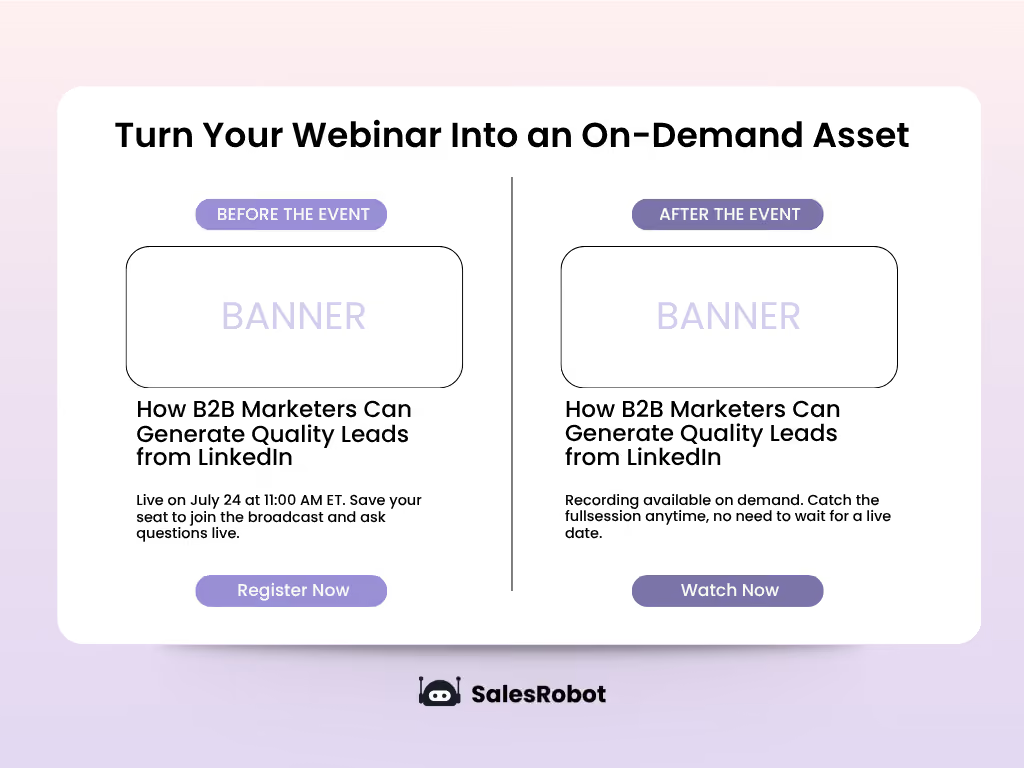
A webinar that already happened isn't dead weight. You've already done the hard part (the landing page, the promotion, the list of registrants), so don't let it go stale.
Turn your registration page into an on-demand page instead. Swap "Register Now" for "Watch Now," and let visitors access the recording whenever they want.
Promote that page the same way you promoted the live event: sponsored content, ads, organic posts, group shares.
If you co-hosted the webinar with a client or industry expert, pull a few strong clips from the recording and share highlights with your audience. Chances are some of them will want the full session.
Your co-host benefits too, since they're promoting to their own audience at the same time. Everyone walks away with something.
Repurpose the Recording
Marketers are good at getting more mileage out of the same piece of content, and a webinar transcript is one of the easiest ways to do that.
You can transcribe your recording into text and turn it into a blog post with very little extra work, which adds long-form content to your site and helps your SEO over time.
Where SalesRobot Fits In
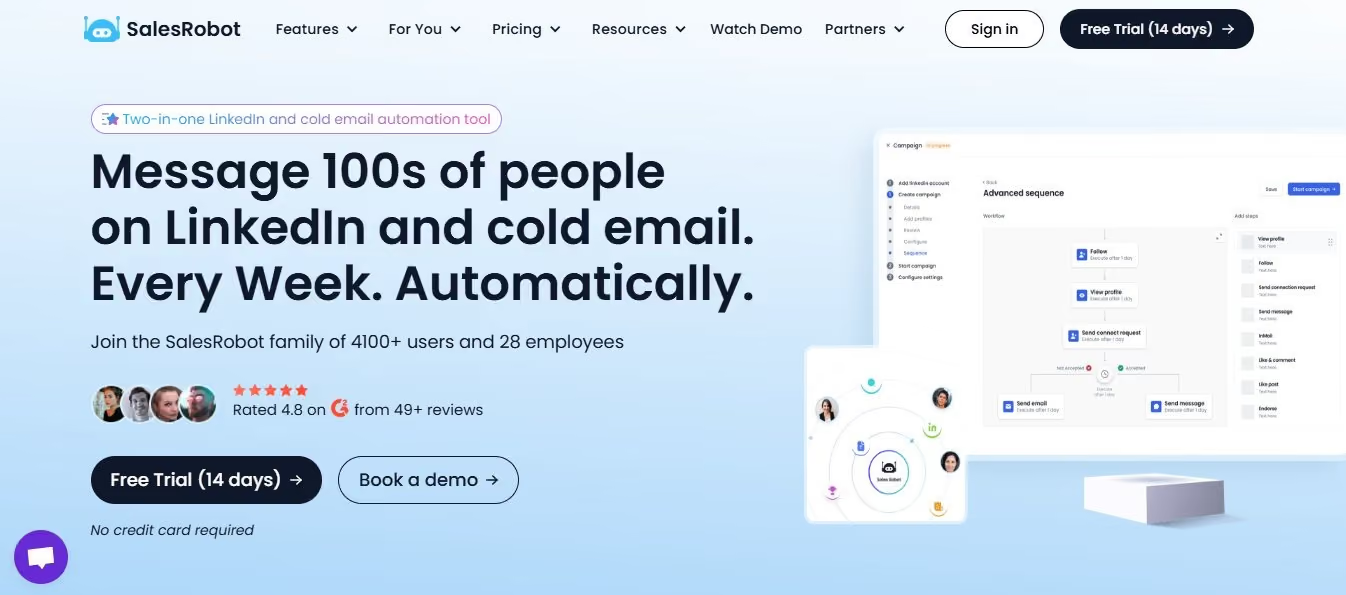
Setting up the webinar is one problem.
Filling it with the right B2B audience is a different one entirely, and that's the part SalesRobot is actually built for.
It's a cloud-based LinkedIn and email automation tool that runs 24/7, so your laptop doesn't need to stay open and there's no Chrome extension to babysit.
It works through LinkedIn's mobile-app APIs on the backend, which keeps ban risk close to zero.
You can pull a list of everyone in a relevant LinkedIn group, everyone who attended a related event, or anyone who commented on a specific post, then run automated, personalized outreach on that list.
The two features that tend to move the needle most are AI-personalized voice notes and AI-cloned video messages sent at scale, with some users reporting reply rates above 40%.
There's also an AI Appointment Setter add-on that replies to inbound leads in your LinkedIn inbox within minutes and keeps nurturing them until they book a call.
Key Takeaways
LinkedIn Events launched back in 2019.
In December 2021, LinkedIn merged Live and Events into one experience, combining Live's reach with Events' planning and targeting tools.
If your team runs events regularly, online or off, it's worth building this into your existing event management workflow rather than treating it as a separate project.
Share your Event on LinkedIn and wherever else your audience hangs out, invite people from your own network directly, and keep the Event feed active with genuinely interesting posts in the lead-up.
That combination, a solid LinkedIn sales funnel, and consistent Lead Gen Form capture is what turns a webinar from a one-time event into a repeatable lead source.
Until next time,
Byeeeeeee!

Wow your leads by cloning yourself and sending personalized videos and voice notes to each lead on LinkedIn.
If you don't reply to leads within 5 mins, your chances of converting them fall by 50%. Our AI replies on your behalf instantly! (and yes, you can train it)

Don't shoot in the dark. Get detailed analytics on what's working
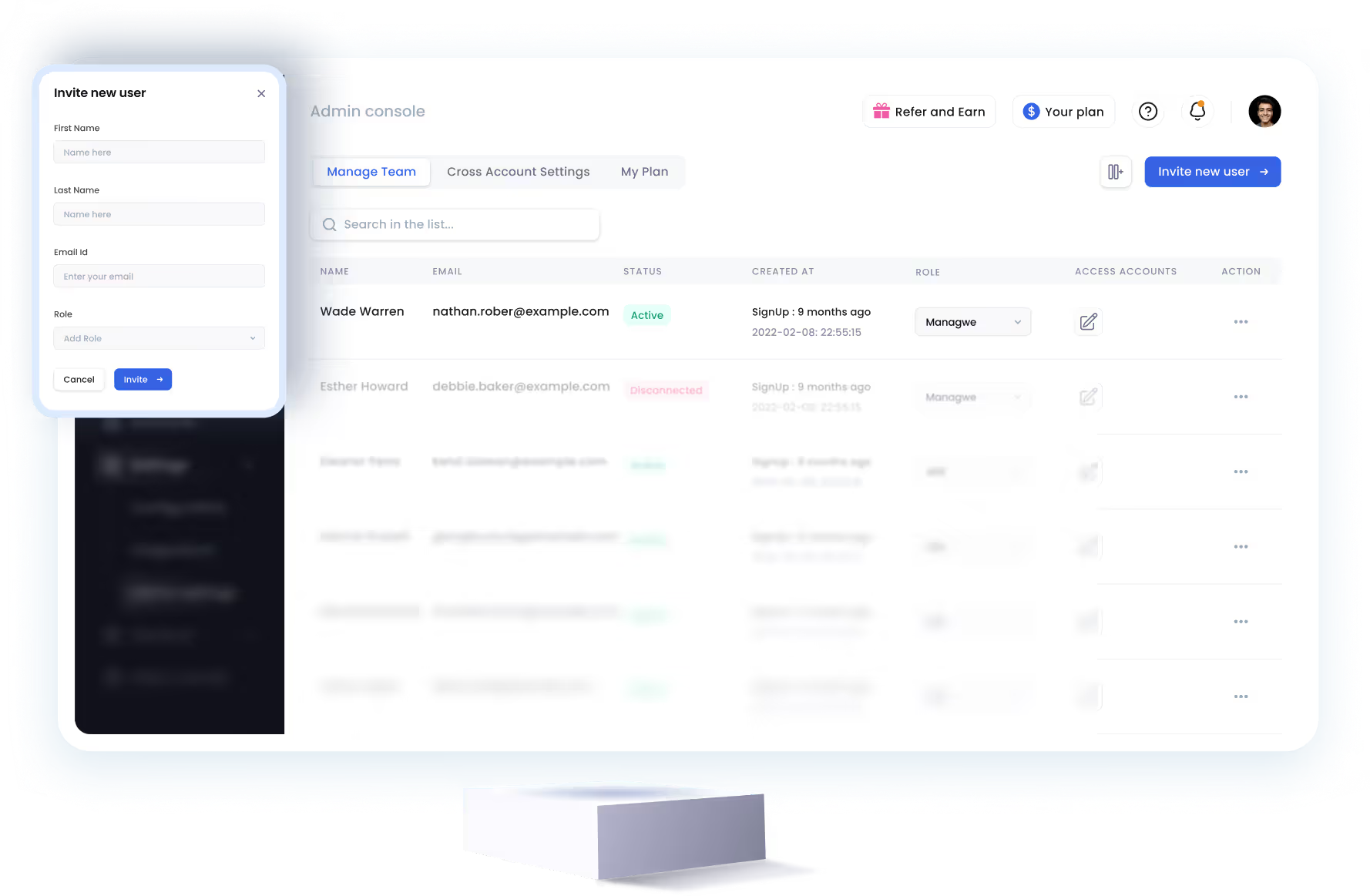
SalesRobot allows you to invite other team members, so that they can add their LinkedIn Account, run outreach campaigns and get amazing results just like you.
.avif)


Trusted by 4100+ innovative B2B sales teams and lead gen agencies

.avif)
.avif)


.avif)