.avif)
TL;DR
- FlashLabs wants to do a lot. Prospect research, data enrichment, intent signals, outreach, calling, CRM work, and now AI agents that can actually carry out sales tasks.
- The company started with FlashRev, its sales intelligence and engagement platform, and has been pushing further into AI with SuperAgent.
- The goal is to let sales teams give AI a task and have it handle the work instead of simply telling a salesperson what to do next.
- Best for: Sales and revenue teams that want prospecting, data, outreach, and AI workflows in one place.
- Pricing: SuperAgent has a free Explorer plan with 1,500 monthly tokens per seat. The Operator plan is $211.75/month when billed annually, with 15,000 tokens per month per seat. FlashRev has also had separate paid plans and enterprise pricing.
- Worth knowing: FlashLabs is much broader than a typical sales engagement platform. Whether that's useful or just a lot of software depends on how much of your sales process you actually want to hand over to AI.
What Is FlashLabs?
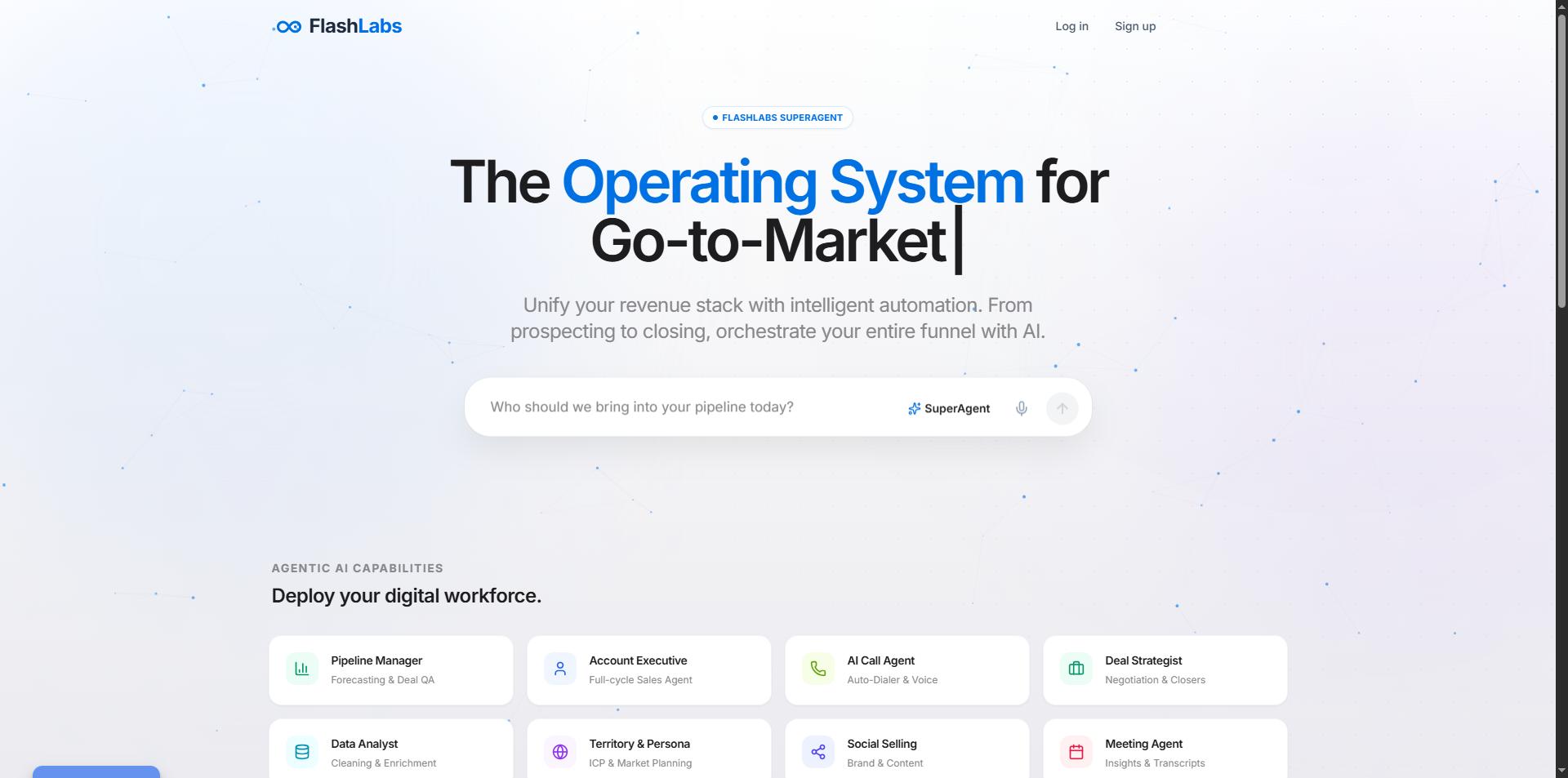
FlashLabs is the company behind FlashRev, a sales intelligence and engagement platform that brings prospecting, enrichment, intent data, outreach, and calling together.
More recently, FlashLabs has been putting more emphasis on SuperAgent, which acts as an AI command center for sales and GTM work. It can work across things like prospecting, research, meetings, sequences, calls, pipeline management, and CRM workflows.
So this isn't really just another AI email writer.
FlashLabs is trying to become the layer that sits across the sales process and actually gets things done.
What Does FlashLabs Actually Do?

A lot, frankly.
FlashRev can help sales teams find and enrich prospects, build lead lists, identify intent signals, run outreach sequences, make calls, and connect the whole thing with their CRM.
Its outreach covers email, phone, social, and other channels, while the AI features are designed to help with research, personalization, and follow-up.
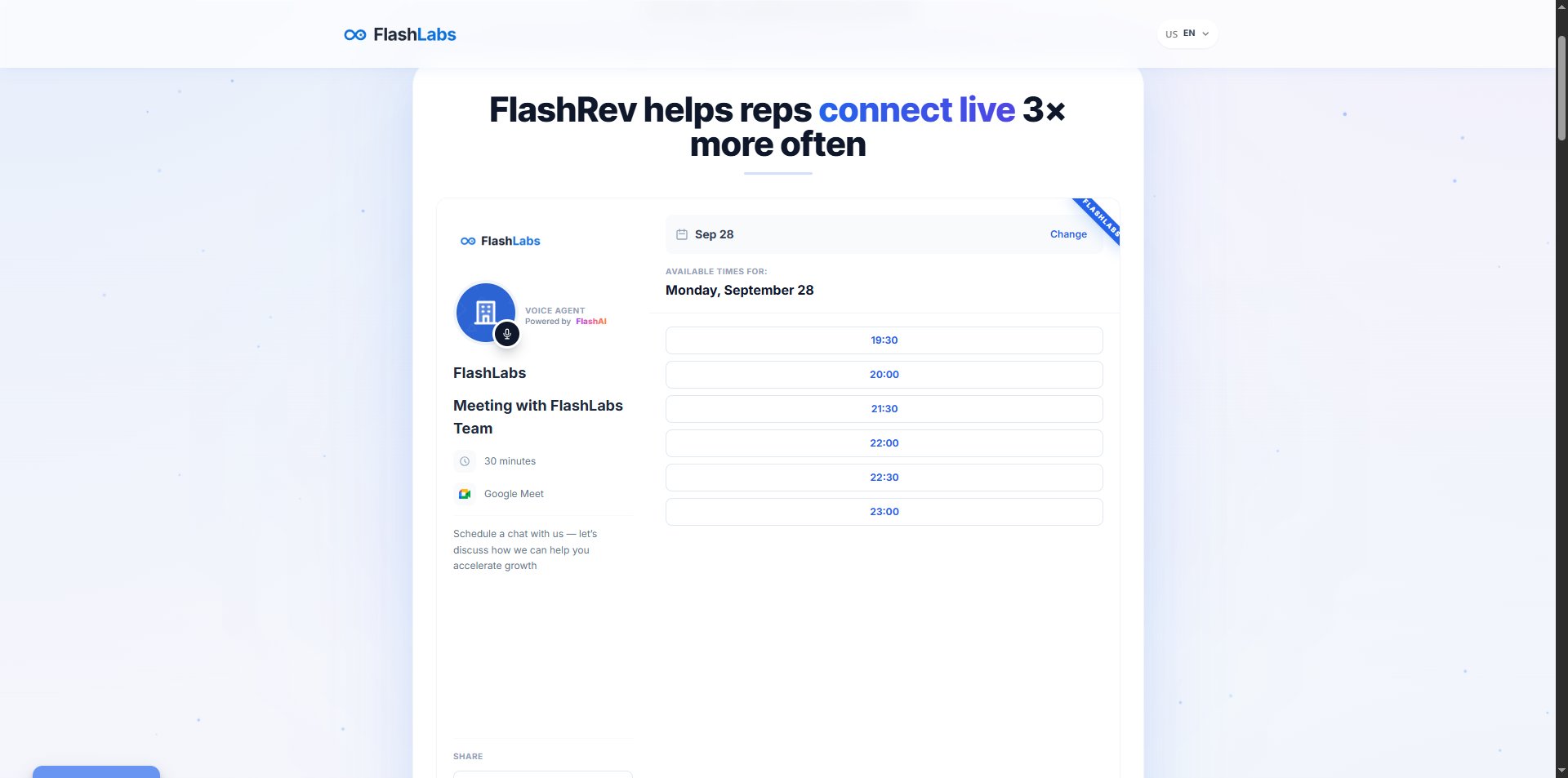
Then there's SuperAgent, which pushes the automation further. Instead of manually jumping between all those features, you can use an AI agent to handle tasks such as researching an account, finding prospects, building sequences, summarizing meetings, or working with sales data.
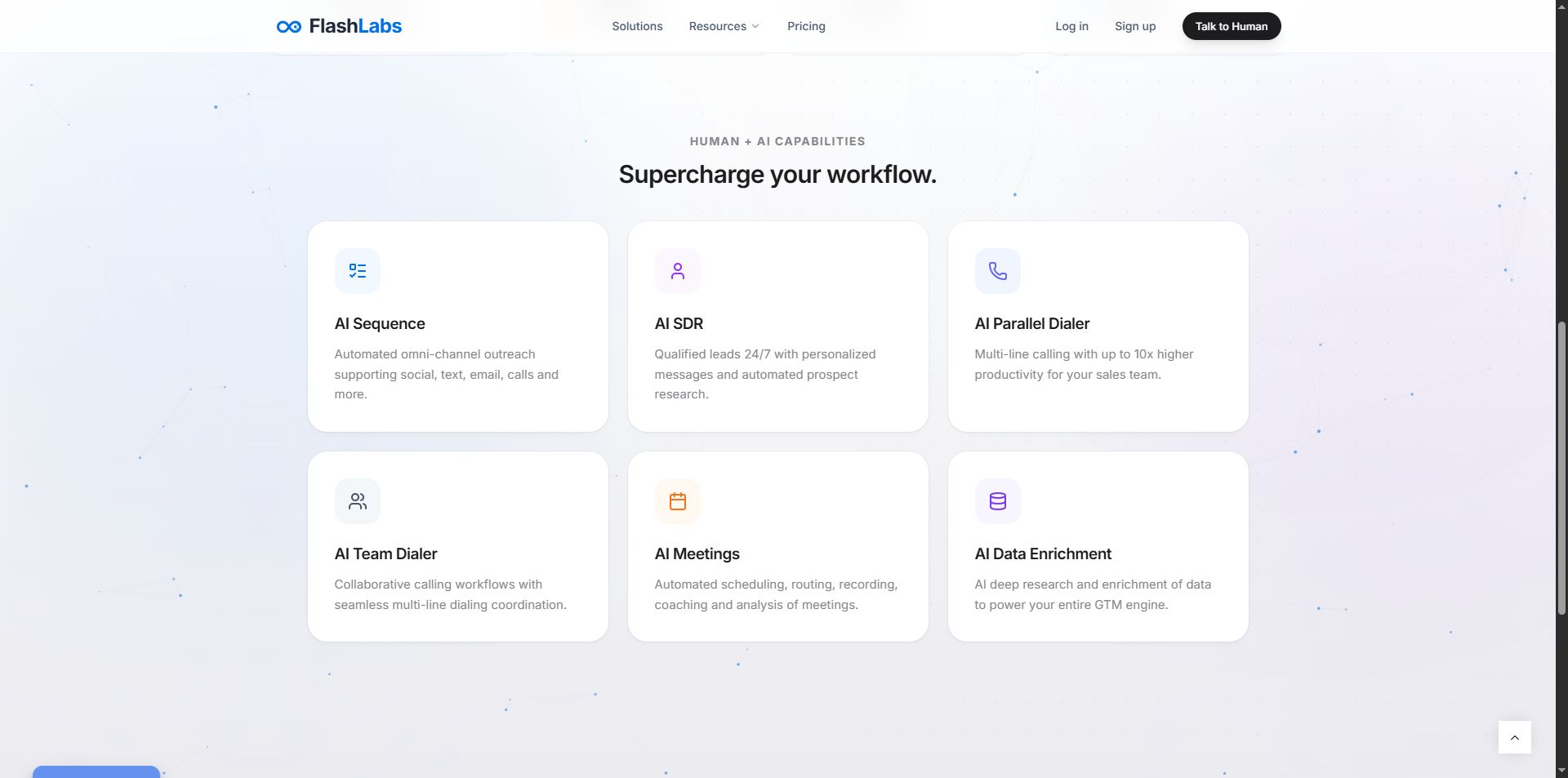
The appeal is obvious: fewer tools and less repetitive work. The downside is that FlashLabs can feel like a lot if all you wanted was a decent prospecting database and an email sequence.
FlashLabs for Prospecting
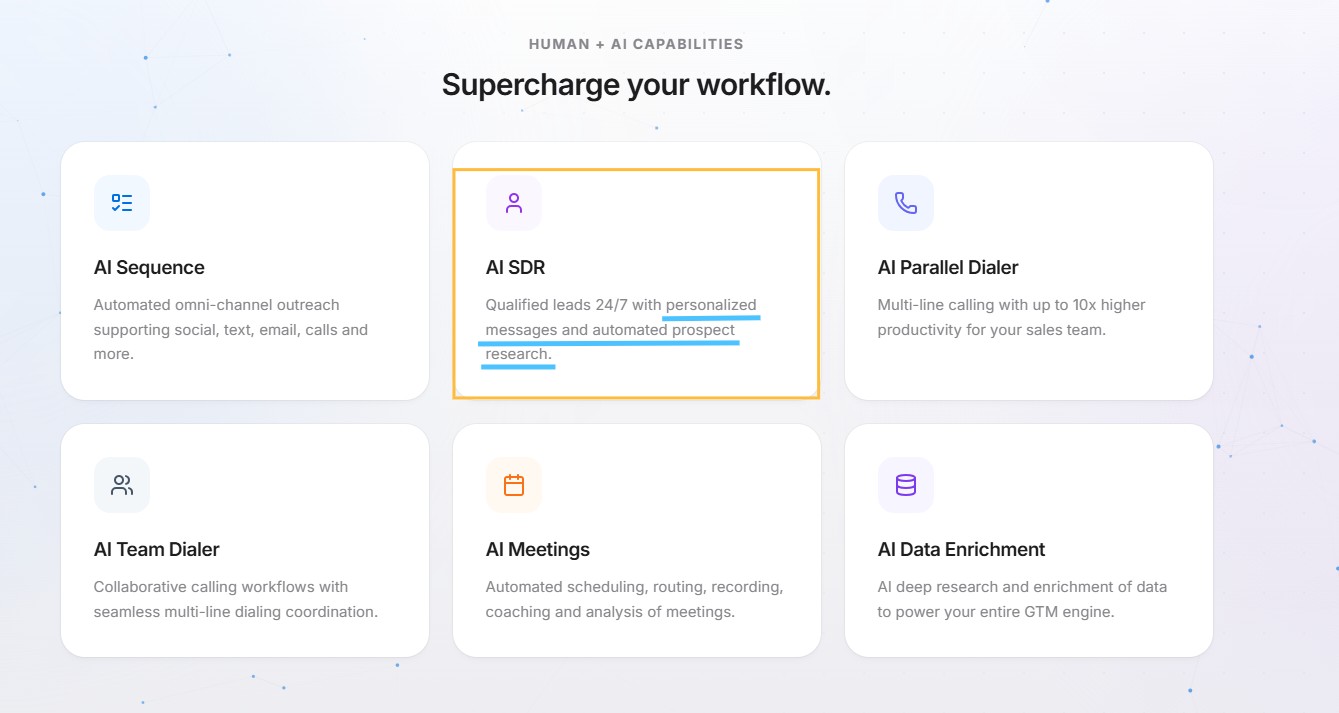
This is probably the strongest part of the platform.
FlashLabs combines prospect data with enrichment and intent signals, so sales teams can search for companies and contacts and then narrow them down based on things like company information, technology, hiring activity, website activity, and other buying signals.
The idea is to get from "these companies might be interesting" to "these are the people I should actually contact" without doing five rounds of research first.
It's useful, especially for teams doing prospecting at scale.
Just don't assume the data is perfect. G2 reviewers like the lead-generation capabilities, but outdated or inaccurate data is one of the recurring complaints.
What About Outreach?
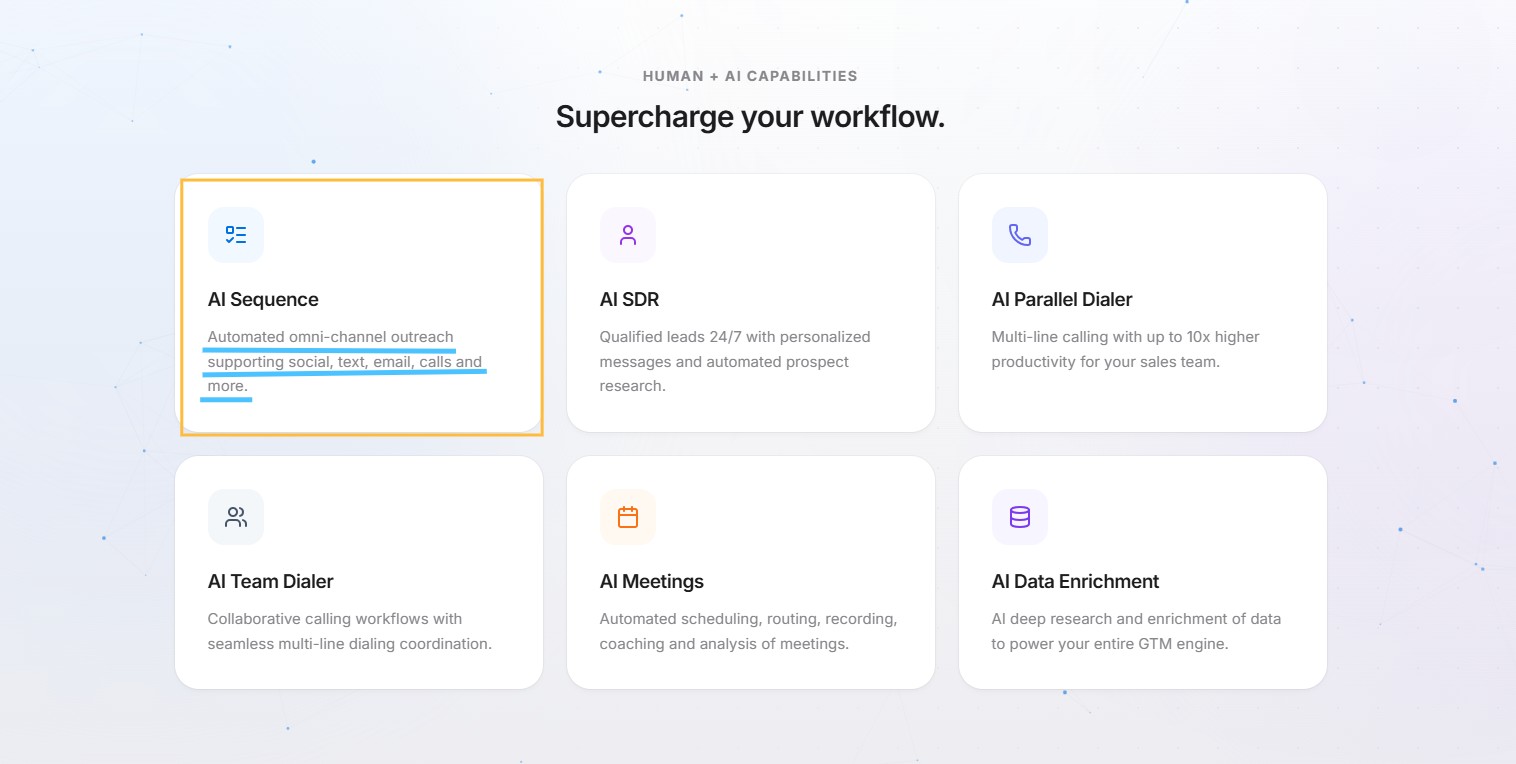
FlashLabs doesn't stop at finding prospects.
FlashRev can run email and social sequences, make calls, send follow-ups, and manage other outreach channels from the same platform.
The calling side is particularly notable.
Its AI Parallel Dialer can dial multiple contacts at once, while AI features handle things like transcripts, recommendations, and call analysis.
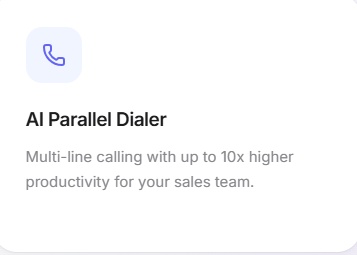
That makes FlashLabs closer to a full sales engagement platform than a simple sales intelligence tool.
You can find the prospect, research them, contact them, and keep the conversation moving without immediately reaching for another tool.
What About the Data?
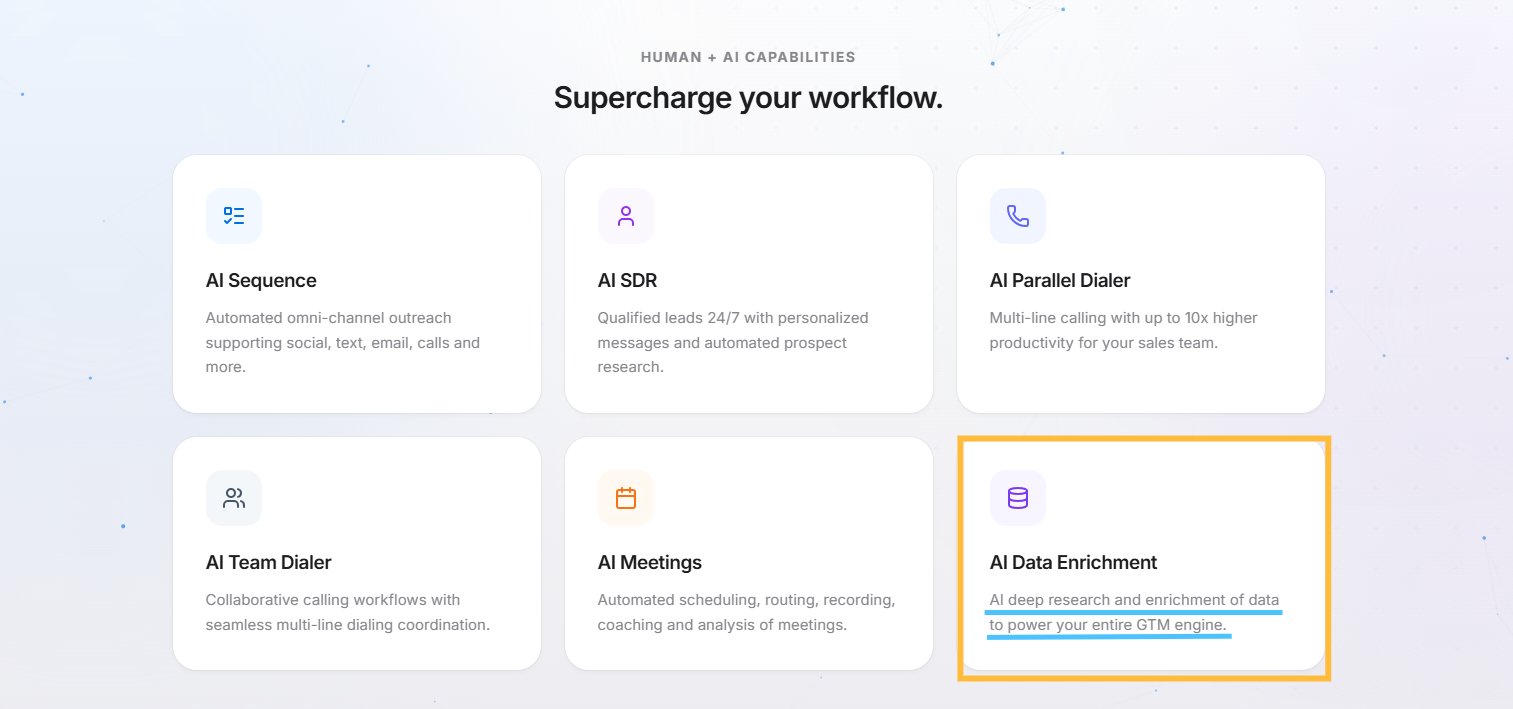
This is where I'd keep expectations realistic.
FlashLabs has a big data and enrichment offering, and the platform puts a lot of emphasis on intent and real-time signals.
That's useful when you're trying to identify prospects who are actually worth contacting rather than simply downloading another giant list of names.
But G2 reviews show that data accuracy isn't perfect.
Users generally like the platform's lead generation and ease of use.

However, outdated records and inaccurate information come up as common complaints.

So FlashLabs can cut down a lot of research time, but you shouldn't treat every record as gospel.
FlashLabs Customer Reviews
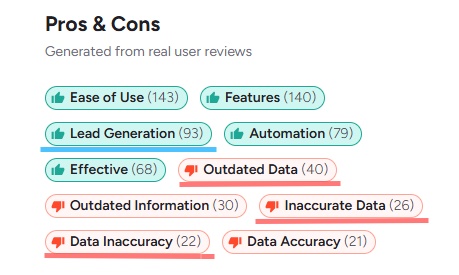
FlashLabs makes some big performance claims around conversions, retention, and reducing sales costs. Those are company claims, though, rather than independent benchmarks, so I'd treat them as something to investigate rather than a guarantee.
G2 gives a more grounded picture.
FlashRev currently has a 4.6/5 rating across 664 reviews, with users praising its ease of use, lead generation, automation, and AI features.
⚠️Data quality is the main recurring criticism. That's a pretty reasonable summary of the product: there's a lot to like, but the data still needs checking.
FlashLabs Pricing
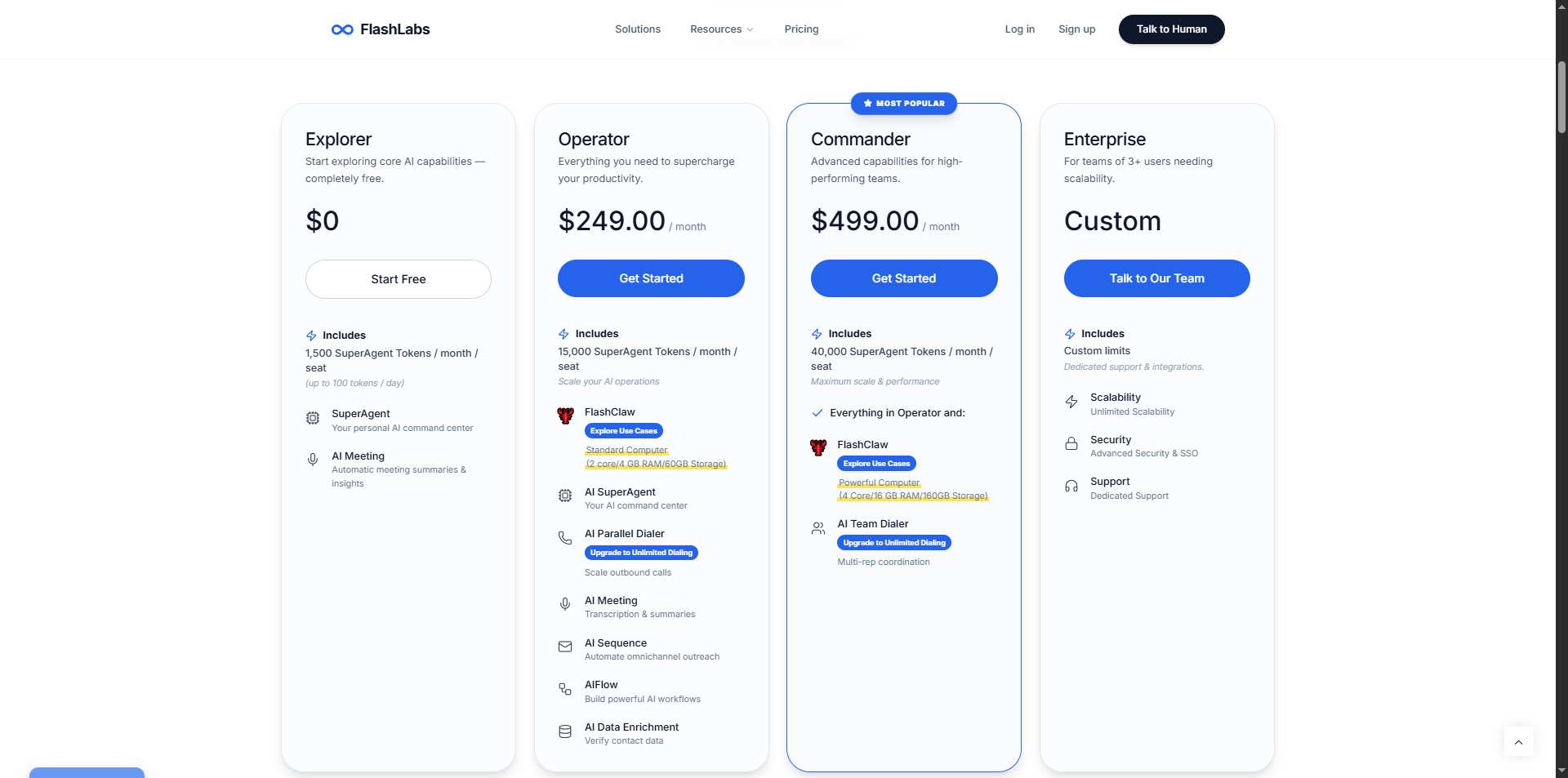
FlashLabs has a free Explorer plan with 1,500 SuperAgent tokens per month.
Paid plans start at $249/month for Operator, which includes 15,000 tokens, AI sequences, data enrichment, AI meetings, and the parallel dialer.
Commander costs $499/month and bumps that up to 40,000 tokens, along with team dialing and higher usage limits. Enterprise pricing is custom.
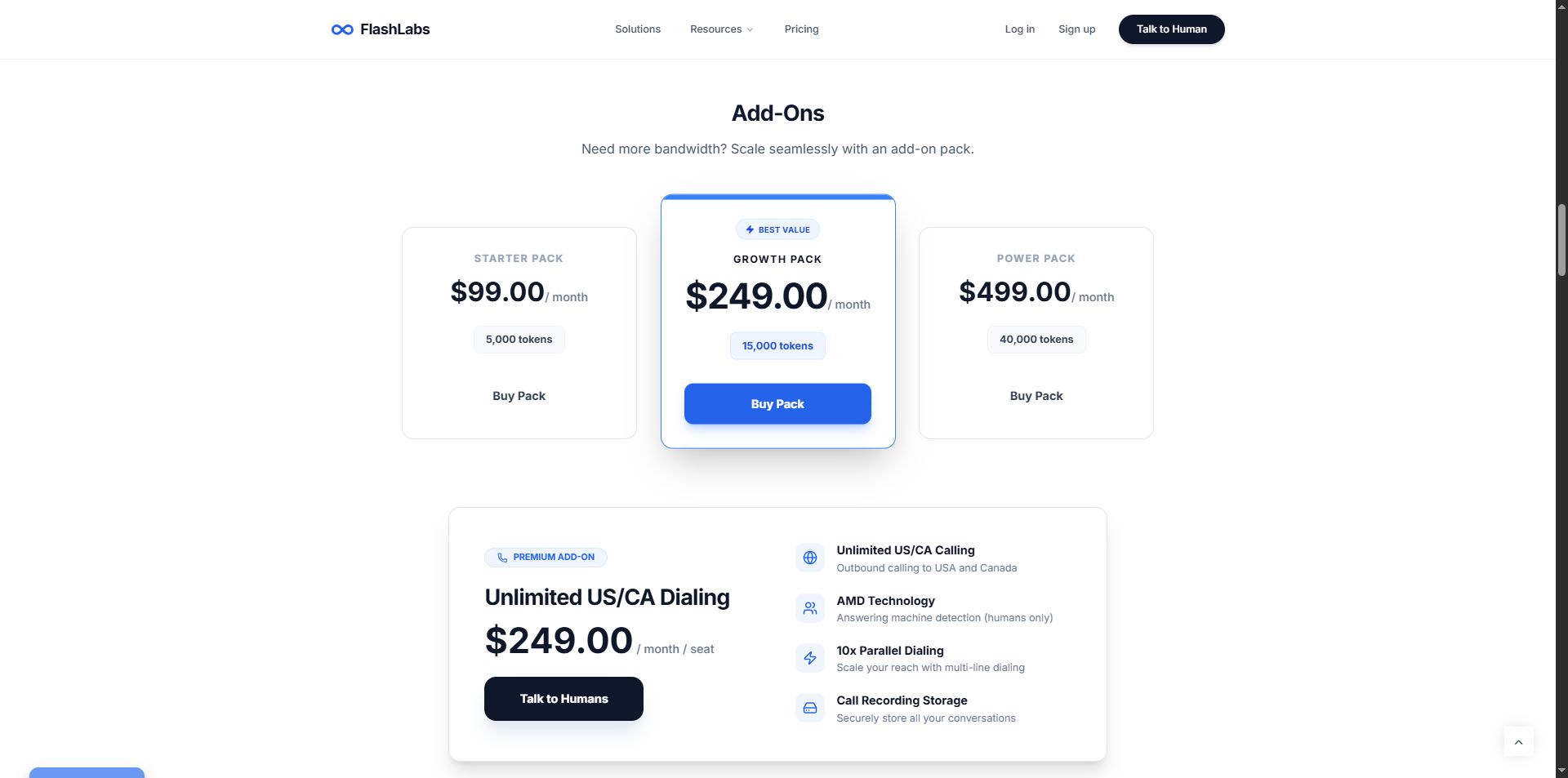
There are also token add-ons starting at $99/month for 5,000 tokens, so your actual cost can climb depending on how heavily you use the AI features.
FlashLabs vs. SalesRobot: How Do They Compare?
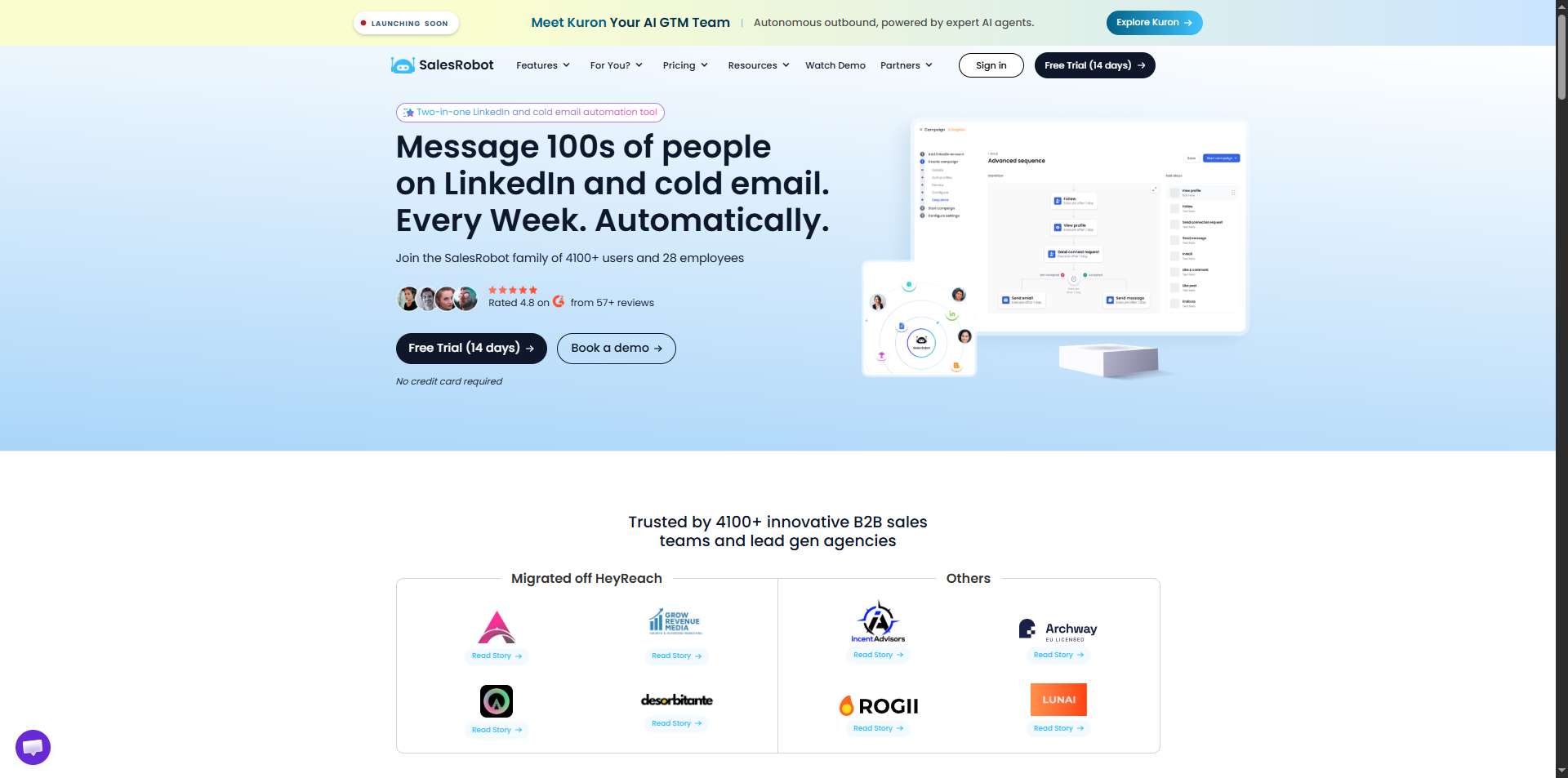
FlashLabs and SalesRobot overlap, but they're going after slightly different things.
FlashLabs is trying to cover the wider sales workflow: finding prospects, researching accounts, enriching data, running outreach, making calls, managing CRM activity, and increasingly letting AI handle those tasks.
SalesRobot is more focused on outreach. It handles LinkedIn and email campaigns, personalization, follow-ups, AI conversations, appointment setting, and voice and video messages.
What SalesRobot Does
Mobile API Safety: Because SalesRobot connects through LinkedIn's mobile APIs, your outreach activity mimics natural human behavior.
Users consistently report running sustained, high-volume campaigns without account flags or restrictions, which is the single biggest operational concern with any LinkedIn automation tool.

AI Appointment Setter: After a prospect replies, SalesRobot's AI takes over the conversation, handles qualification questions, and books meetings automatically.
You can train it on your specific criteria and ideal responses, which means the early-stage pipeline management largely runs without manual involvement. For smaller teams without a dedicated SDR, this is a meaningful capability.

AI Voice Clone and Video Messages: SalesRobot lets you send personalized voice notes and video messages through LinkedIn as part of automated sequences.
The AI Voice Clone feature lets you record a short voice sample once, then generates individualized voice notes for each prospect that sound like you, without recording each one manually.
In sectors where relationships and trust matter, this kind of personal touch at scale tends to drive significantly higher reply rates than text-only outreach.

AI Variables and Hyper-Personalization: SalesRobot pulls data directly from a prospect's LinkedIn profile to write personalized message sequences automatically. You are not working from a static template that gets blasted to everyone.
Each message is adapted to the individual, which matters when you are reaching decision makers who see generic outreach constantly.

Multi-Step Sequences: You can build complex LinkedIn and email campaigns with smart delays and behavioral conditions. Leads can be imported from Sales Navigator, standard LinkedIn search, LinkedIn groups, event attendees, or CSV uploads, giving you flexibility in how you build and target your prospect lists.
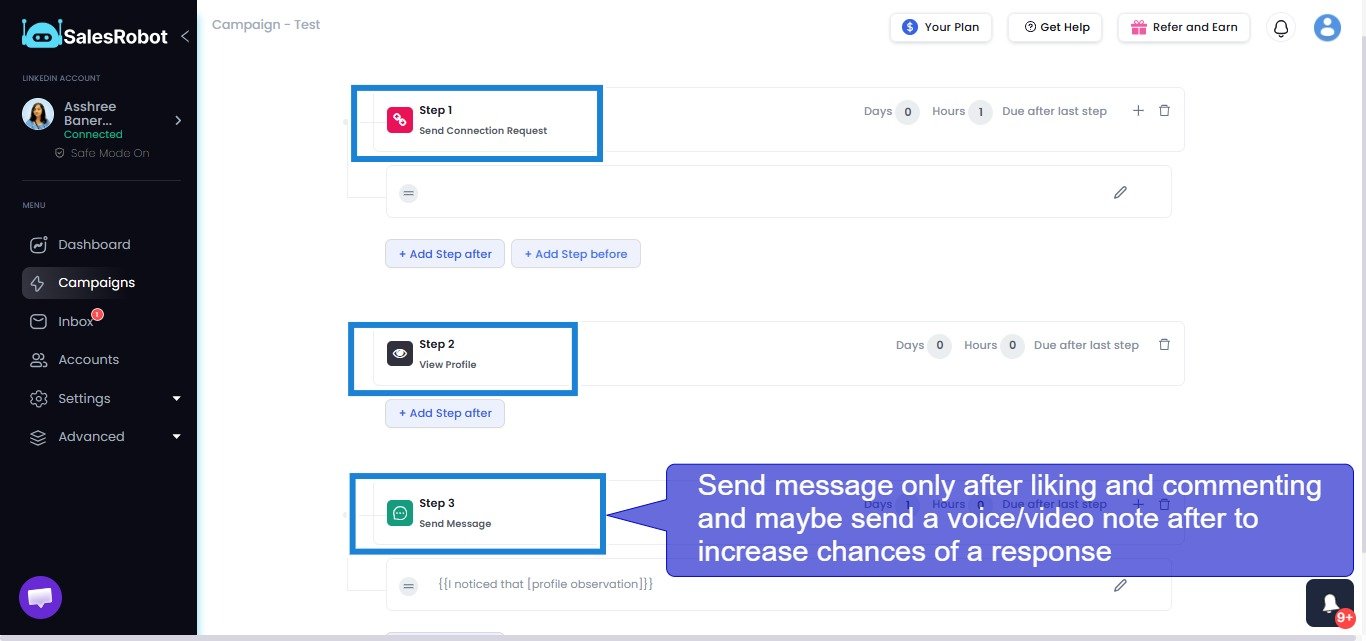
Unified Inbox and Mini CRM: All LinkedIn and email conversations consolidate in one place with automatic reply detection. SalesRobot stops messaging automatically when a prospect responds, preventing the over-automation feel that kills conversations.
You can tag leads, filter by interest level, and track where every prospect sits without switching between platforms.
MCP support: SalesRobot can also connect with AI assistants like ChatGPT and Claude through MCP, allowing you to manage campaigns, import prospects, check accounts, and work with LinkedIn conversations using natural-language commands instead of constantly switching between tools.
Team Management and Analytics: For agencies or sales teams managing multiple LinkedIn accounts, SalesRobot tracks performance across accounts, prevents duplicate outreach between team members, and surfaces detailed analytics on what sequences and approaches are actually working.
SalesRobot pricing (per LinkedIn account, 14-day free trial, no credit card required):
- Basic: $59/month ($39/month billed annually).
- Advanced: $79/month ($59/month billed annually).
- Professional: $99/month ($79/month billed annually).
- Enterprise: Custom.

It also has a 4.8 rating on G2, with 50+ independent user reviews.
What About Kuron?
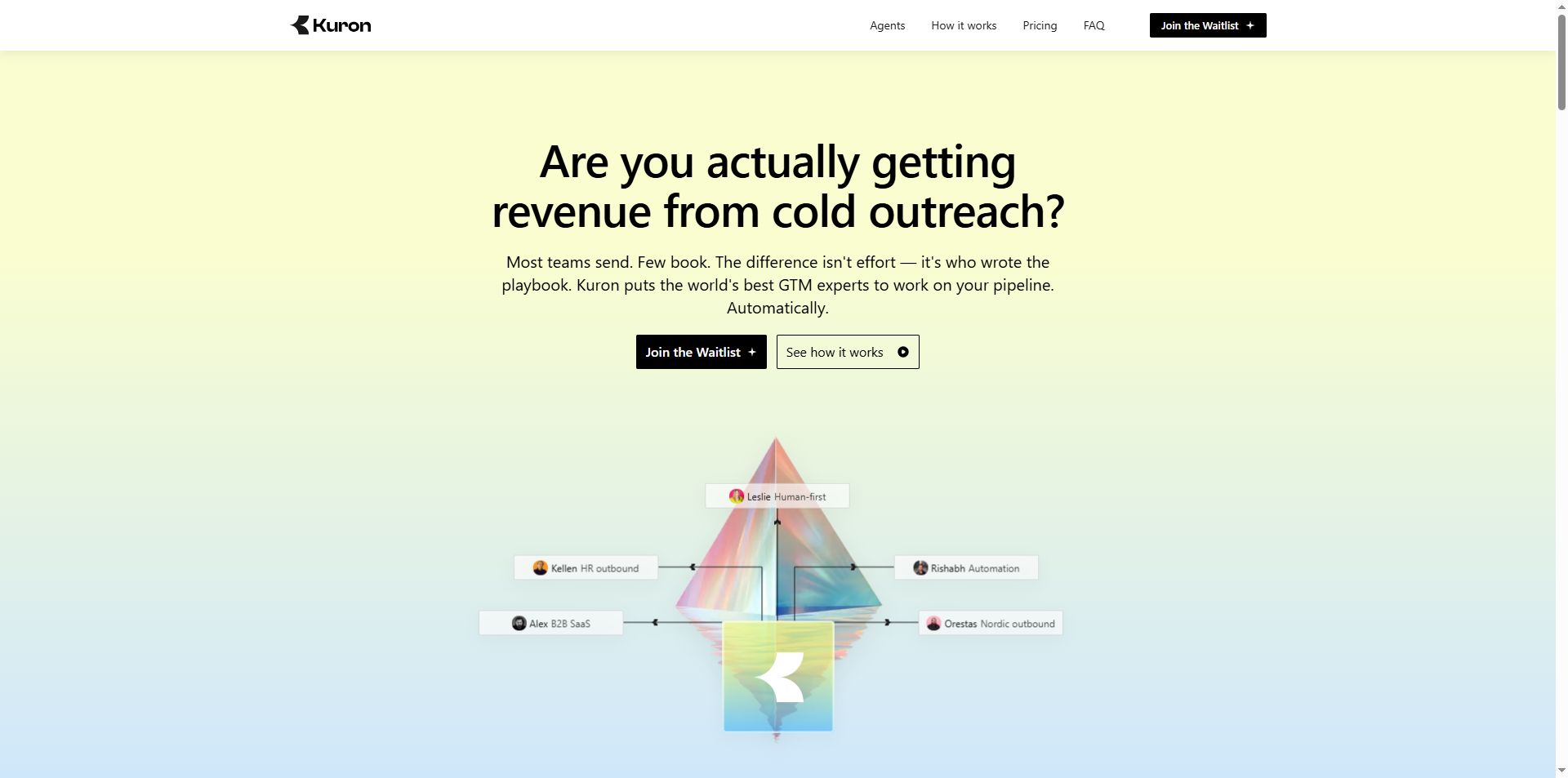
And this is where things get even more interesting.

The idea is to move beyond simply giving sales teams another database or another outreach dashboard and have AI help with the broader go-to-market process.
Kuron is an AI-powered GTM platform from the very team behind SalesRobot, built around a slightly different idea: instead of giving sales teams another tool to operate, why not have AI actually run the outbound process?
The idea came from the founders' experience running SalesRobot and working with outbound teams.
They found that the hard part wasn't simply sending more messages.
Good outbound depends on knowing who to target, which signals matter, how to approach different buyers, when to follow up, and when to leave someone alone.
Kuron is being built to capture that kind of decision-making.
That includes figuring out who your best-fit customers are, which segment makes the most sense, what strategy to use, and how to actually execute the outbound process.
Kuron is currently on a waitlist, so it's not something I'd treat as a drop-in Flashlabs replacement today.
But conceptually, Kuron is chasing a similar larger question:
What happens when AI stops being a tool inside your sales process and starts running more of the process itself?
Instead of: "Here's a database. Good luck."
The goal is increasingly: "Here's the outcome you want. Let the AI figure out more of the work in between."
The distinction is important.
SalesRobot is about turning prospects into conversations and meetings.
Kuron is trying to bring more of those pieces together into an AI-powered GTM workflow.
Who Is FlashLabs Best For?
FlashLabs makes the most sense for sales teams that have a lot of prospecting and outreach happening across different tools.
If you need data, intent signals, enrichment, sequences, calling, CRM integrations, and AI workflows, having all of that under one roof can be genuinely useful.
For a small team that just needs LinkedIn automation or email sequencing, though, it may be overkill. You don't necessarily need an entire AI sales command center to send a few hundred emails.
Pros and Cons
✅Pros:
- Combines sales intelligence, enrichment, outreach, and calling
- Strong prospecting and intent-data capabilities
- Supports multiple outreach channels
- AI can handle research and sales workflows, not just write copy
- CRM integrations and automation
- SuperAgent takes the platform beyond traditional sales engagement
❌Cons:
- The sheer number of features can feel overwhelming
- Data accuracy and outdated records are recurring G2 complaints
- Broader platform means higher cost than focused outreach tools
- Some performance claims come directly from FlashLabs
- Probably more than smaller teams need
Final Verdict

FlashLabs is interesting because it isn't trying to make salespeople slightly faster at using ten different tools. It's trying to reduce the number of tools they need in the first place.
For a larger sales team, that could be a big deal. You get prospecting, data, intent, outreach, calling, and AI workflows in one platform.
But if you're mainly looking for LinkedIn and email automation, FlashLabs can feel like bringing a whole toolbox when you really needed a screwdriver.
That's where SalesRobot is easier to understand. It focuses on outreach, keeps more of the campaign strategy in your hands, and its MCP integration is starting to bring some of the same AI-driven automation into a much more focused platform.
👉 Why not check out the 14-day free trial here and decide for yourself? No worries, we don't ask for credit card details!

Wow your leads by cloning yourself and sending personalized videos and voice notes to each lead on LinkedIn.
If you don't reply to leads within 5 mins, your chances of converting them fall by 50%. Our AI replies on your behalf instantly! (and yes, you can train it)

Don't shoot in the dark. Get detailed analytics on what's working
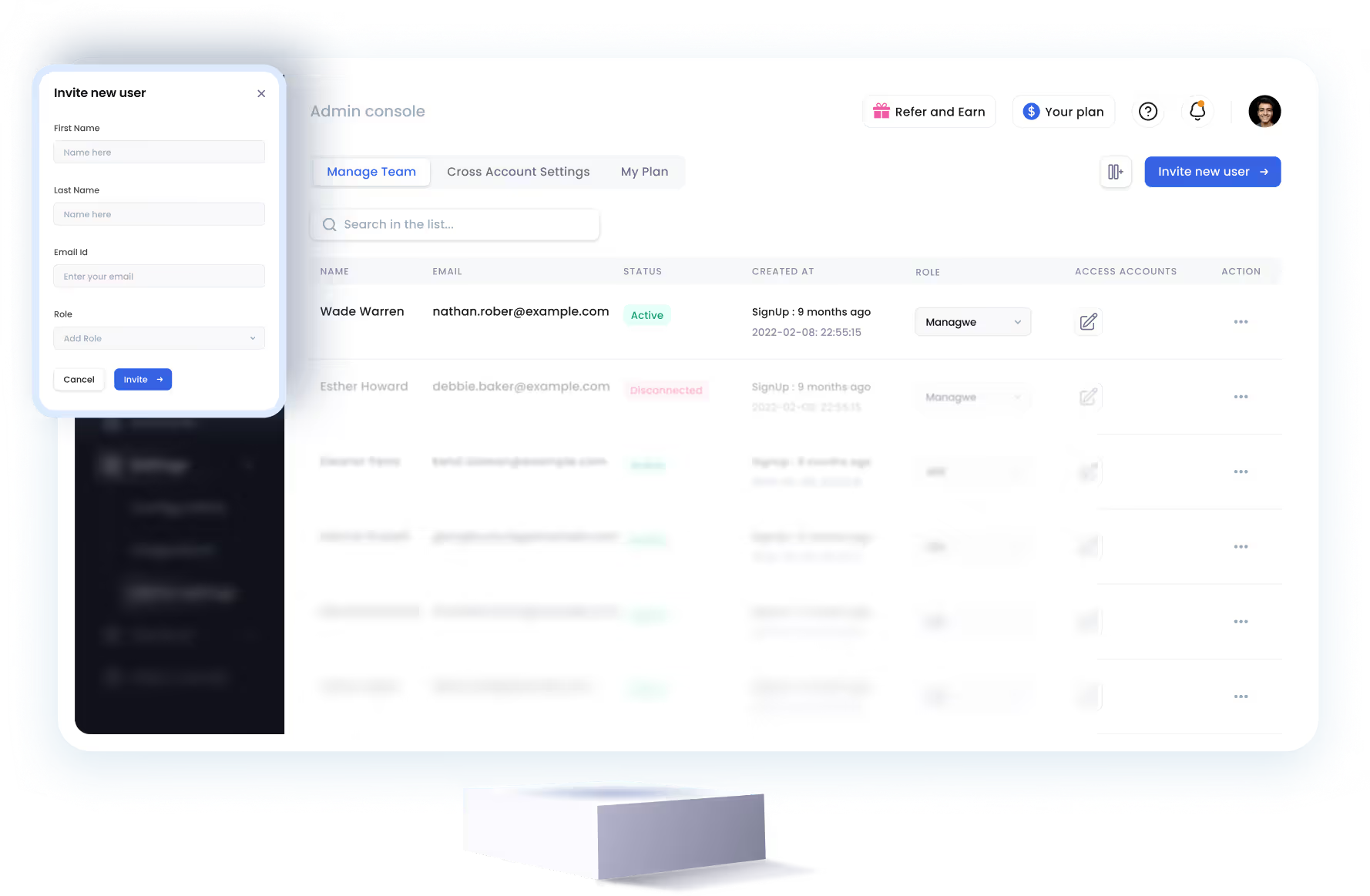
SalesRobot allows you to invite other team members, so that they can add their LinkedIn Account, run outreach campaigns and get amazing results just like you.
.avif)


Trusted by 4100+ innovative B2B sales teams and lead gen agencies

.avif)

.avif)



.avif)


Heading 1
Heading 2
Heading 3
Heading 4
Heading 5
Heading 6
Lorem ipsum dolor sit amet, consectetur adipiscing elit, sed do eiusmod tempor incididunt ut labore et dolore magna aliqua. Ut enim ad minim veniam, quis nostrud exercitation ullamco laboris nisi ut aliquip ex ea commodo consequat. Duis aute irure dolor in reprehenderit in voluptate velit esse cillum dolore eu fugiat nulla pariatur.
Block quote
Ordered list
- Item 1
- Item 2
- Item 3
Unordered list
- Item A
- Item B
- Item C
Bold text
Emphasis

Superscript
Subscript