.avif)
For years, "LinkedIn automation" meant one thing: a tool that sends connection requests and follow-ups on a schedule you set.
You wrote the message.
You picked the delay.
You checked back later to see who replied, then you did the actual talking yourself.
That's not what's running in 2026.
The gap between "automation" and "agent" used to be marketing language.
Now it's the entire product category.
What Actually Changed
An autonomous AI agent doesn't just execute a sequence you built. It makes decisions inside the conversation.
It reads a reply, figures out what the prospect actually meant, decides whether that's an objection or a buying signal, and responds accordingly.
No human touches the keyboard until there's a meeting on the calendar, or until the agent decides a human needs to step in.
That's the real definition of agentic outreach: software that runs the judgment calls a rep used to make, not just the busywork around them.
Old-school LinkedIn automation could send 100 connection requests a day. It could not tell the difference between "not interested right now" and "not interested ever."
A LinkedIn AI agent can, and that difference is the whole story of 2026.
Why This Shift Happened Now
Three things converged.
Response time became the whole game. If you don't reply to a lead within five minutes, your odds of converting them drop by roughly half. No human sales team, no matter how disciplined, replies to every LinkedIn message in five minutes, every single time, at 11pm on a Tuesday. An agent does.
Generic personalization stopped working. Swapping in someone's first name used to count as personalization. Buyers scroll past that instantly now. The bar moved to messages that actually reference someone's recent post, their role change, their company's news, which requires an agent doing real research, not a mail-merge field.
LinkedIn got more expensive to get wrong. InMail costs climbed, response rates on generic blasts fell, and getting an account restricted became a real business risk instead of an annoyance. Teams needed outreach that was both smarter and safer, not just faster.
Put those three together and "send more messages" stopped being a strategy.
What an Autonomous LinkedIn Agent Actually Does
Strip away the buzzwords and a genuinely autonomous agent is handling four jobs that used to sit with a human SDR.
Finding the right people. Not a static list bought once and reused for six months. Ongoing identification of leads that match your ideal customer profile, pulled straight from LinkedIn search, Sales Navigator, or your own CSV.
Writing something worth reading. A unique opening line built from the prospect's actual profile, not a template with blanks filled in.
Working on the reply. This is the part that separates an agent from a bot. When someone responds, whether it's a hard no, a question, or genuine interest, the agent reads the intent and reacts like a person would.
Closing the loop. Nurturing the conversation until the prospect is ready, then booking the meeting directly into a calendar, with no manual handoff.
SalesRobot’s AI Appointment Setter: Agentic Outreach in Practice
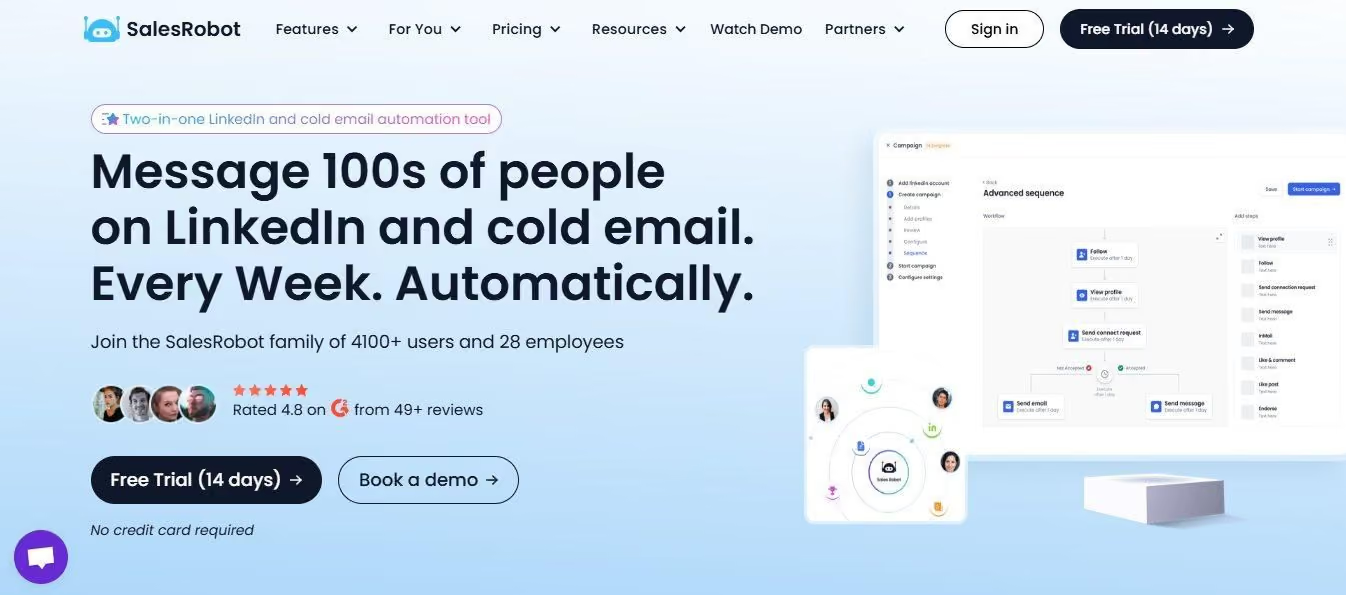
If you want to see what "agentic" actually looks like instead of just talking about it, this is the feature to point at.
SalesRobot's AI Appointment Setter picks up the moment a lead replies.
It's not choosing between three canned responses.
It's reading the message, deciding what kind of reply it is, and handling it accordingly.
The Five Minute Problem
Here's the math that made this feature necessary in the first place.
If you don't reply to a lead within five minutes of them responding, your odds of converting them drop by roughly half.
That's not a LinkedIn-specific quirk, it's basic human attention.
A prospect who just typed "tell me more" is warm for a few minutes, then they're back in their own inbox, forgetting you exist.
No sales rep, however good, replies to every single message within five minutes.
The AI Appointment Setter doesn't have that problem.
It's watching every conversation at once, all day, and it replies the moment something comes in.
What It Actually Does With a Reply
The agent isn't picking from a script. It's reading each message and deciding what kind of situation it's actually in.
A flat no. Someone says they're not interested, or too busy, or to circle back never.
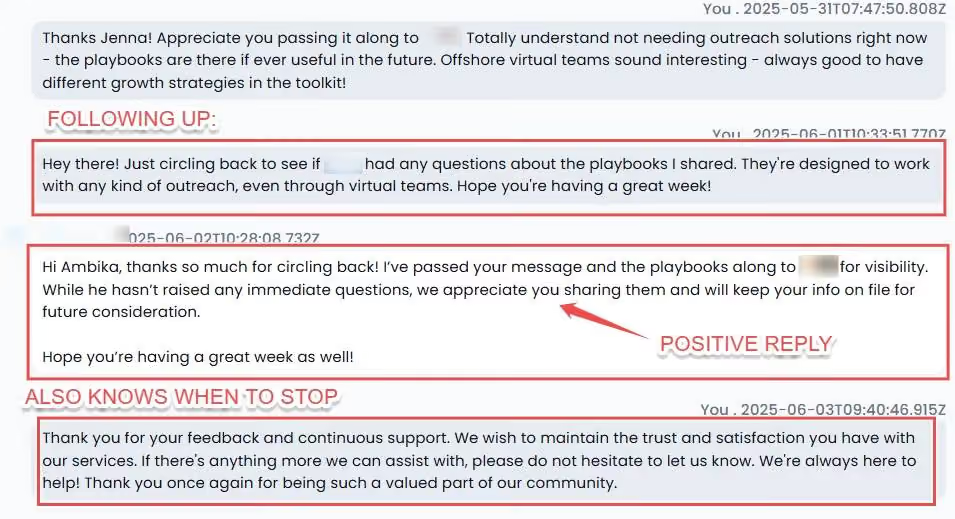
The agent doesn't push. It acknowledges the response and closes the thread out cleanly, no awkward follow-up two days later asking if they've "had a chance to think it over."
A real question. "What does this actually cost" or "how does this work with my team" gets a specific, contextual answer, not a copy-pasted brochure line.

If the question is answerable with a booking link, it includes one.
A soft maybe. "Interested, but slammed right now" is the trickiest reply to get right. Too aggressive and you lose them. Too passive and they forget you.
The agent nurtures this one with a relevant, low-pressure follow-up instead of letting it die in an inbox, and it can enroll that lead into a different sequence built specifically for "not now, but later."
A genuine yes. Once someone shows real interest, the agent works the conversation toward an actual booked time instead of stalling in small talk, and drops it straight into your calendar.

Copilot or Autopilot, Your Call
You decide how much you're comfortable handing over. Copilot mode drafts every reply and holds it for your approval before anything goes out, so you can watch exactly how the agent handles real conversations before trusting it further.
Autopilot mode runs the entire back and forth on its own, including booking the call, with no manual step in between.
That's really the whole shift in one feature. Older LinkedIn tools automated the sending.
This automates the thinking, which is the part that actually used to require a person sitting at a keyboard, reading every reply, and deciding what to say back.
Where Appointment Setter Fits, and Where It Doesn't
Appointment Setter earns its place in this story because it solves the hardest part of agentic outreach.
Which is reading a reply and knowing what to do with it, since that's a matter of judgment rather than scheduling, and it's the piece most tools still fake with canned response trees instead of genuine interpretation.
That said, it picks up the conversation after it has already started, and while it handles everything from the reply onward, it isn't building the lead list or writing the first message that gets someone to respond in the first place.
That's the gap.
A genuinely autonomous agent, by the four-job definition laid out above, also has to find the right people and write something worth their attention before there's any reply to work with, and that half of the loop currently still needs a human hand on it.
That gap is exactly why we're building Agentic Mode:

A single agent that runs the entire loop from start to finish, beginning with defining your ideal customer profile and sourcing the list, continuing through writing the outreach itself, and carrying on into everything that comes back afterward.
Appointment Setter is the reply-and-close engine inside that loop, and it's available to use right now.
Agentic Mode is the version built to own the whole thing, so nothing in the process still depends on a person filling in the missing half.
Join the Agentic Mode waitlist →
What This Means If You're Still Running Sequences Manually
If your current setup is "write five follow-up messages, schedule them, and check the inbox twice a day," you're not behind because you lack a tool.
You're behind because the job changed underneath the tool.
The prospects you're reaching are increasingly used to getting a reply in minutes, not days. A generic sequence that ends the moment someone types back "tell me more" is now the outreach equivalent of a dial tone.
The teams pulling ahead in 2026 aren't the ones sending more messages. They're the ones whose first response after a lead says something back is faster, more relevant, and more consistent than what a busy human rep could manage on their fifteenth conversation of the day.
Where This Goes From Here
Agentic outreach on LinkedIn isn't going to stay a differentiator for long. It's turning into the baseline expectation, the same way cloud-based automation replaced browser extensions a few years back.
The practical question for 2026 isn't whether to bring an agent into your outreach. It's how much of the conversation you're comfortable handing over, and how you find that out without guessing.
Starting in Copilot mode and watching real replies get handled is the fastest way to answer that for yourself, with the option to hand over the keys once the pattern holds up.
Frequently Asked Questions
What is an autonomous AI agent in the context of LinkedIn outreach?
It's software that doesn't just send pre-written messages on a schedule. It reads replies, interprets intent, and decides how to respond, nurture, or escalate a conversation on its own, with the goal of booking a meeting without a human managing every step.
How is agentic outreach different from regular LinkedIn automation?
Regular automation executes a sequence you built in advance. Agentic outreach makes decisions inside the conversation itself, adjusting to what a prospect actually says instead of following a fixed script.
Can a LinkedIn AI agent handle objections on its own?
Yes, within the boundaries you set. Tools like SalesRobot's AI Appointment Setter can respond to pushback, answer questions, and keep a conversation moving, and you choose whether it drafts those replies for your approval or sends them automatically.
Is it safe to let an AI agent run LinkedIn conversations unsupervised?
Most teams don't start there. Copilot mode lets the agent draft replies for a human to approve first, so you can see how it handles real conversations before switching to fully autonomous Autopilot mode.

Wow your leads by cloning yourself and sending personalized videos and voice notes to each lead on LinkedIn.
If you don't reply to leads within 5 mins, your chances of converting them fall by 50%. Our AI replies on your behalf instantly! (and yes, you can train it)

Don't shoot in the dark. Get detailed analytics on what's working
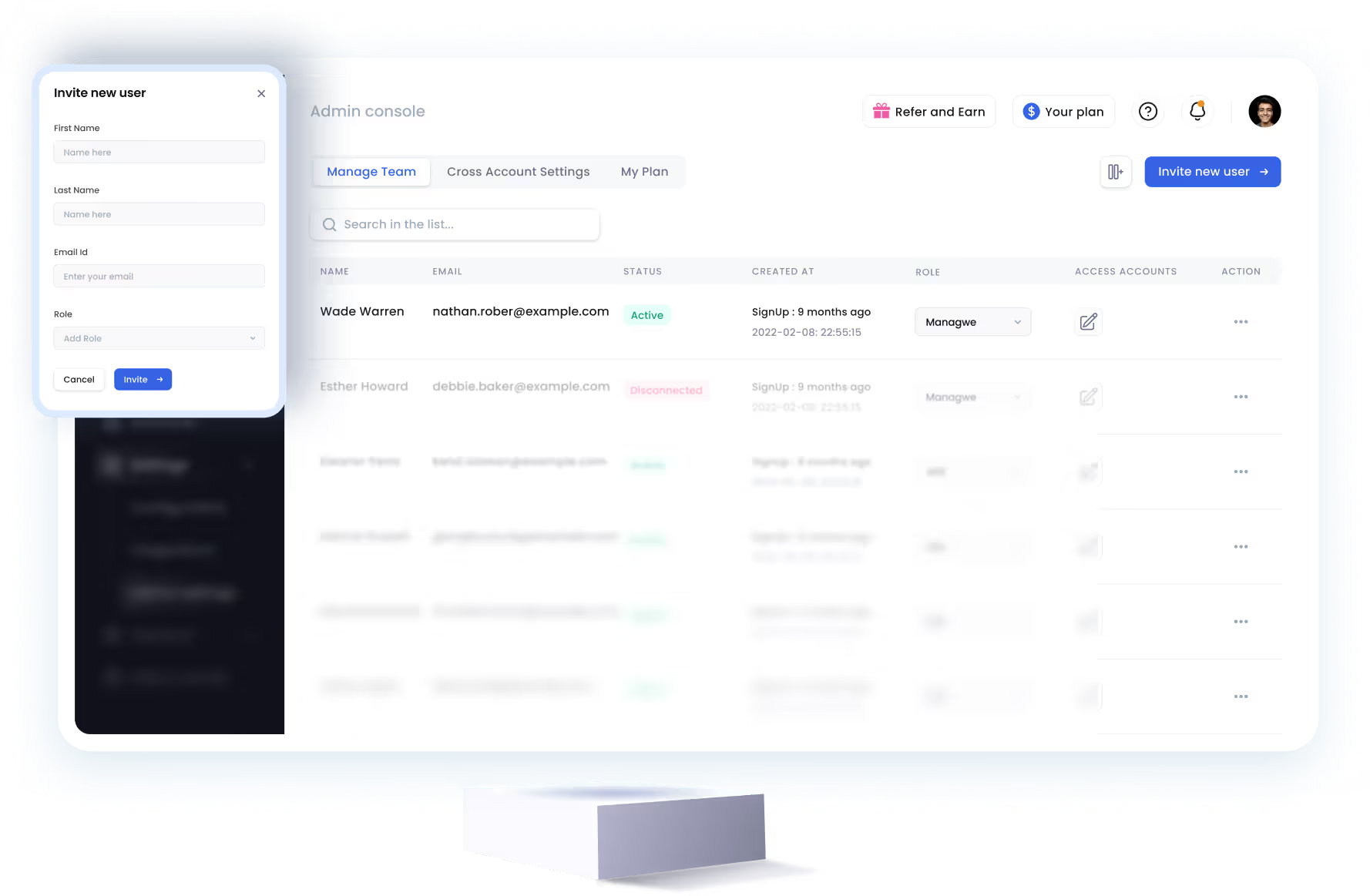
SalesRobot allows you to invite other team members, so that they can add their LinkedIn Account, run outreach campaigns and get amazing results just like you.
.avif)


Trusted by 4100+ innovative B2B sales teams and lead gen agencies

.avif)

.avif)




.avif)