.avif)
TL;DR
- FullEnrich is a waterfall enrichment platform that aggregates 20-plus data providers to find and verify work emails, personal emails, and mobile phone numbers for B2B prospects, charging credits only when valid data is actually returned.
- It is rated 4.8 out of 5 on G2 and trusted by fast-growing B2B companies, offering triple email verification, unlimited users on all plans, and 3-month credit rollover on monthly plans.
- Pricing starts from around $29/month on Starter for 500 credits, with Pro plans from around $55/month for 1,000 credits and scaling upward. Annual billing saves approximately 30 percent.
- The key limitations to understand before buying: phone numbers cost 10 credits each; work emails cost 1 credit; and the Chrome extension lost its LinkedIn functionality in June 2024 after LinkedIn restricted access.
- Manual URL pasting is now the primary LinkedIn workflow.
- FullEnrich finds and verifies contact data. It does not send outreach, run sequences, or automate LinkedIn. SalesRobot covers that execution layer naturally alongside it.
The math on single-source enrichment tools has never fully worked.

A typical B2B data provider finds verified emails for 60 to 70 percent of contacts and meaningful phone numbers for even fewer.
That means roughly one in three prospects on any list simply cannot be reached, not because they are unreachable, but because the provider you are relying on does not have their data.
The tool charges you regardless.
FullEnrich was built around a different premise.
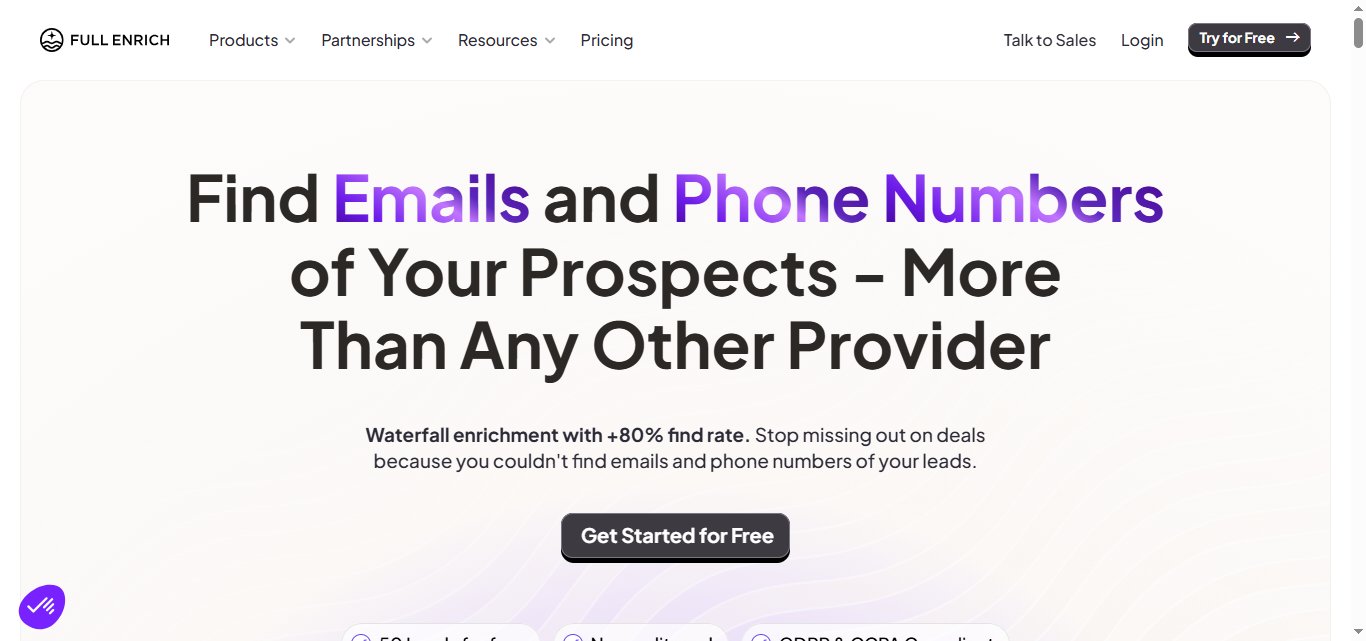
Rather than accepting a single provider's answer, it sequences through 20-plus premium data sources one after another until it finds a verified match or exhausts all options. Apollo, RocketReach, ContactOut, Hunter, Datagma, People Data Labs, Prospeo, Enrich.so, and twelve more providers are queried in turn.

The result is an average email find rate of around 80 percent that can climb considerably higher depending on geography and industry, versus the 60 to 70 percent baseline most teams accept from single-source tools.
The other notable design decision: credits are only charged when valid, verified data is actually returned.
No match found, no charge. This changes the effective cost per usable contact more than the headline pricing suggests.
This review covers what FullEnrich actually delivers, what each plan costs, where it earns its reputation, and where its limitations matter for outbound teams.
One important distinction upfront: FullEnrich is a data enrichment platform. It finds and verifies contact data.
It does not send emails, run outreach sequences, or automate LinkedIn activity. If LinkedIn outreach is part of your workflow, SalesRobot covers that execution layer directly, and we address how the two tools sit alongside each other toward the end.
FullEnrich: What You Need to Know
✅ Pay-for-results pricing across a 20-plus provider waterfall: Credits are only consumed when enrichment succeeds and data is verified. FullEnrich does not charge for failed lookups or data that fails verification. Across 20-plus providers, the platform averages around 80 percent email find rates and is particularly strong for international and EMEA contacts where US-centric single-source tools consistently underperform.
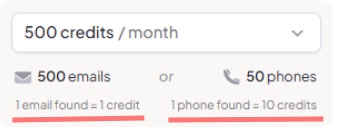
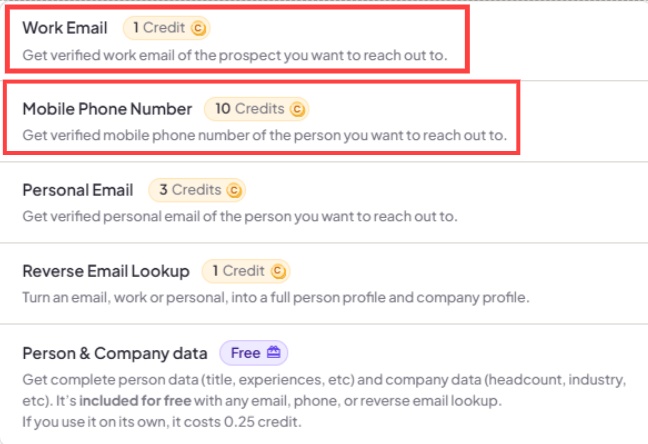
⚠️ Phone numbers cost 10 credits, work emails cost 1 credit: This asymmetry is the most important thing to understand before selecting a plan. A Starter plan with 500 credits covers either 500 verified work emails or just 50 phone numbers. Teams that need significant phone number enrichment alongside emails will burn through plans considerably faster than email-only workflows suggest.
✅ Triple email verification including catch-all detection: FullEnrich applies two verification layers to every email it finds. The first determines whether an email is valid, accept-all, or invalid. The second specifically targets accept-all domains to identify which of those emails are genuinely reachable rather than treating all catch-all results as unverifiable. This results in fewer bounces and better campaign deliverability than standard single-layer verification.

⚠️ The Chrome extension lost LinkedIn functionality in June 2025: LinkedIn significantly tightened its restrictions in mid-2025, and FullEnrich discontinued the extension's LinkedIn enrichment capability to preserve the broader platform's relationship with LinkedIn. The extension can no longer enrich contacts directly from LinkedIn profiles or export from Sales Navigator. The current workaround is manually copying LinkedIn URLs into the FullEnrich web platform, which removes the core convenience the extension was designed to provide.

✅ Unlimited users on all plans with shared credits: Every FullEnrich plan allows unlimited team members to access the workspace, with credits pooled and shared across all users. This is a meaningful differentiator for growing teams and agencies that would otherwise pay per-seat pricing at alternative tools.
⚠️ No contact database, no buying signals, no intent data: FullEnrich does not maintain its own prospect database. It cannot help you discover new leads. Its job is exclusively to enrich contact data for leads you have already sourced elsewhere. Teams that also need intent signals, firmographic filtering, or account targeting tools need separate subscriptions for those capabilities.

Key Features
Waterfall Enrichment Engine

The core feature. When a contact is submitted, FullEnrich queries its network of 20-plus providers in a sequenced cascade. If the first provider does not return a verified result, the next is queried, then the next, until a valid match is found or all sources are exhausted. The sequencing is optimized to prioritize providers most likely to have data for the specific contact's geography, industry, and seniority level.
This multi-source approach delivers consistent enrichment performance across geographies where single-source tools have blind spots. FullEnrich specifically highlights its advantage for EMEA contacts, where US-centric providers can drop to 10 to 40 percent success rates depending on country, while the waterfall maintains more consistent coverage by drawing on European and global data sources alongside the major US providers.
Triple Email Verification
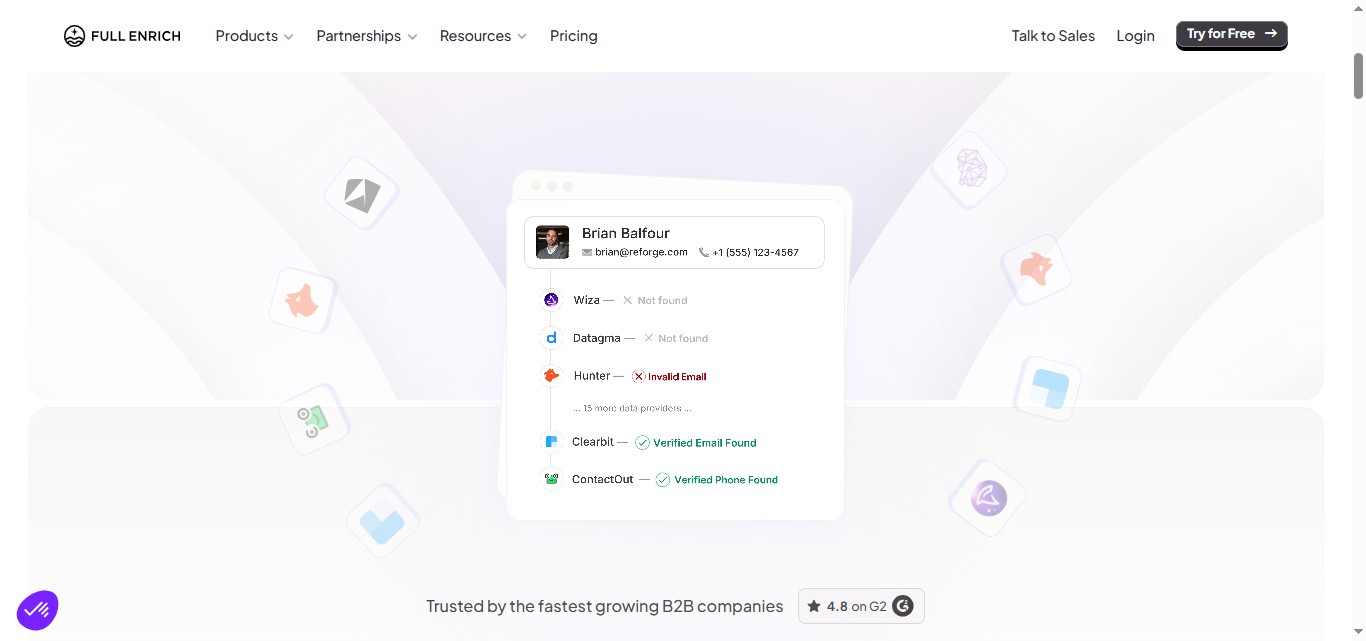
Every email address returned by the waterfall goes through two verification stages before a credit is charged. The first uses standard SMTP and format checks to identify valid, invalid, and accept-all emails.
The second applies a proprietary verification layer specifically for accept-all domains, which typically return positive responses to any address format regardless of whether the specific address exists. FullEnrich's second-layer verification can distinguish valid from invalid within accept-all domains, recovering addresses that simpler tools would exclude or return as unverifiable.
This approach consistently delivers lower bounce rates in cold email campaigns compared to tools with standard single-layer verification.
Credit System and Enrichment Types

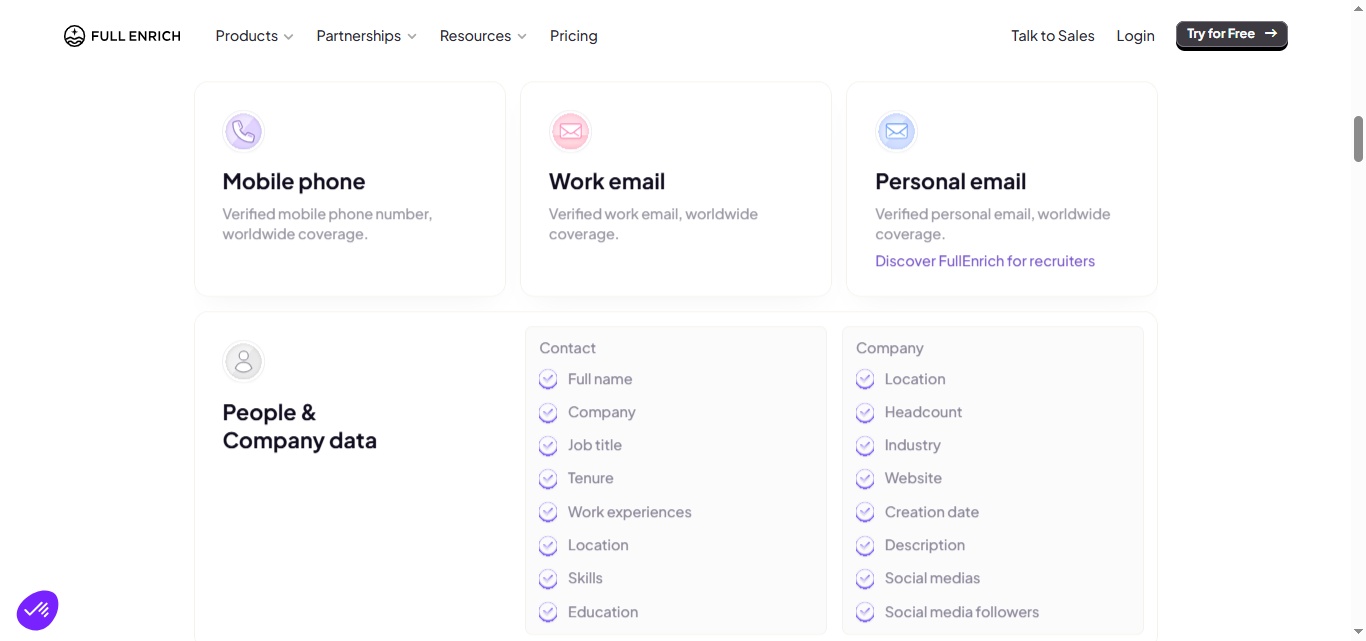
FullEnrich uses a unified credit pool shared across all users in a workspace. Credit costs differ by enrichment type, reflecting the relative complexity and provider costs involved in each lookup.
- Work email: 1 credit per verified result.
- Personal email: 3 credits per verified result.
- Mobile phone number: 10 credits per verified result.
- Reverse email lookup: 1 credit per lookup. Person and company profile data, including job title, work history, company headcount, industry, and funding: included free with any email, phone, or reverse email lookup, or 0.25 credits if run as a standalone lookup.
No credit is charged if enrichment fails. Credits are only consumed after successful verification.
Credit Rollover
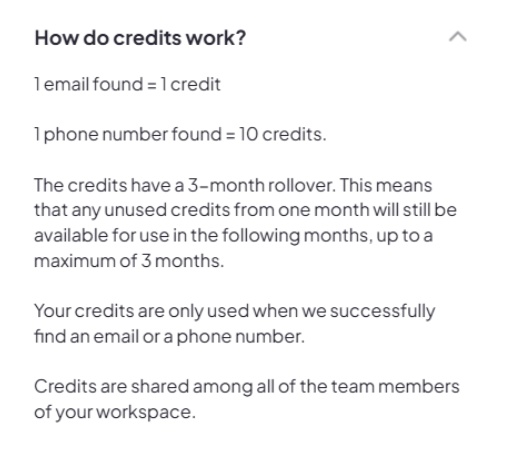
Unused credits roll over for up to three months on monthly plans, capped at the plan's monthly allocation. On annual plans, credits are allocated upfront and valid for the full twelve months. This rollover policy is more generous than tools that expire credits monthly, and it benefits teams with uneven enrichment volumes across months, campaign cycles, or seasonal patterns.
Unlimited Users
All plans include unlimited user seats at no additional cost. Credits are shared across all users in the workspace. For agencies managing enrichment for multiple clients or sales teams adding new SDRs, this eliminates the per-seat cost math that makes some enrichment tools expensive to scale headcount-wise.
API and Integrations

FullEnrich provides a full API for custom integrations, documented in their developer portal. Native integrations are available for HubSpot, Salesforce, Pipedrive, Clay, LinkedIn Sales Navigator (via URL input rather than direct extension since June 2025), Google Sheets, n8n, and Make. The Clay integration is particularly relevant for teams using Clay for workflow orchestration who want FullEnrich's enrichment depth inside Clay tables without managing separate provider subscriptions.
Reverse Email Lookup

Turn an email address into a full person and company profile. Given a work or personal email, FullEnrich returns the associated contact's name, job title, company, LinkedIn profile, and company data. This is useful for enriching inbound leads where an email address is known but other contact and company details are missing.
FullEnrich Pricing
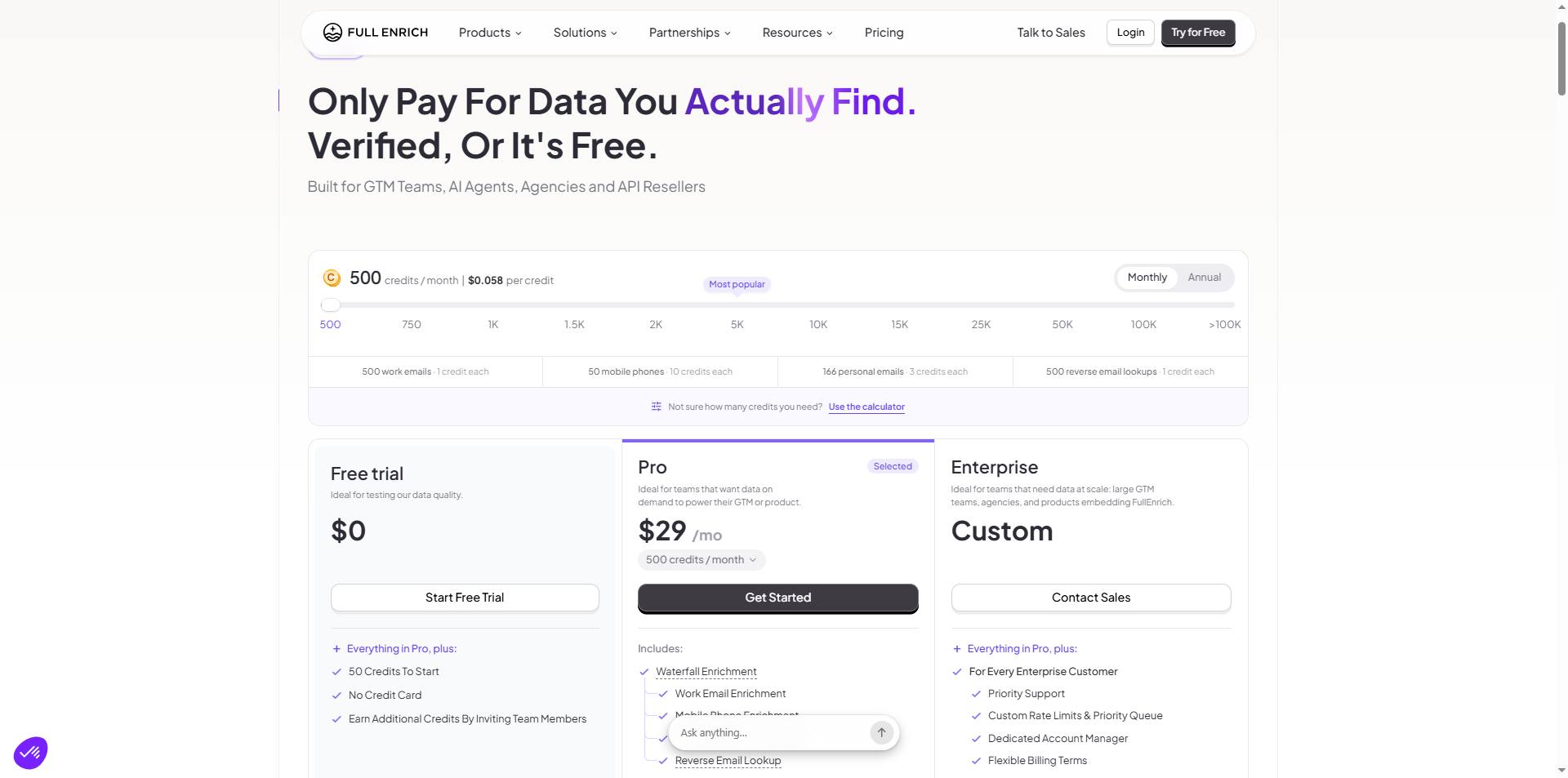
FullEnrich uses a credit-based model where credits are only charged on successful verified results. Credits roll over for three months on monthly plans. Annual plans provide credits upfront with a twelve-month validity and save approximately 20 to 30 percent compared to monthly billing. 50 free credits are available on signup with no credit card required.
Free: 50 credits, no credit card required

Starter: $29/month (monthly billing)
- One-time 50-credit allocation
- Full access to waterfall enrichment and all 20-plus providers
- Work emails, personal emails, or phone numbers
- Best for testing enrichment quality against your specific ICP before committing
Starter: $29/month (monthly billing)
- 500 credits per month
- Covers approximately 500 verified work emails or 50 verified phone numbers
- All 20-plus providers
- Triple email verification including catch-all
- Unlimited users
- API access
- HubSpot, Clay, and Google Sheets integrations
- Credit rollover up to 3 months
- Annual billing saves approximately 20 to 30 percent
- Best for individuals and small teams enriching modest contact volumes
Pro: $55/month (monthly billing)
- 1,000 credits per month
- Higher credit volumes available (3,000 / 5,000 / 10,000 credits and above at scaled pricing)
- Everything in Starter
- Best for sales teams and agencies running consistent moderate-to-high volume enrichment
Scale: Custom pricing, from $500/month
- Custom credit volumes
- Everything in Pro plus:
- SSO
- Dedicated account manager
- Integration of existing vendor API keys into the waterfall
- Enterprise bulk discounts
- Best for large agencies and enterprise teams with high-volume requirements
What Works Well
✅The waterfall genuinely delivers higher find rates than single-source alternatives. The most consistent praise across G2 and independent reviews is that FullEnrich finds contacts that other tools miss. The CEO of Meero, a Series C company, specifically noted that after trying ZoomInfo, Apollo, and Lusha, FullEnrich outperformed all of them for finding emails and phone numbers, while actually reducing cost. For teams with lists of hard-to-find contacts, particularly in EMEA and international markets, the waterfall advantage over single-source tools is real and measurable.
✅Pay-for-results pricing changes the effective cost per usable contact. When competitors charge for every lookup attempt regardless of outcome, the effective cost per valid result is higher than headline pricing suggests. FullEnrich's model ensures every credit spent returns verified, usable data. For teams that have run enrichment at scale and tracked actual match rates, this difference compounds meaningfully over time.
✅Triple email verification including catch-all detection reduces bounce rates. The two-layer verification approach, including the proprietary catch-all resolution technology, delivers lower bounce rates than tools relying on standard single-layer checks. For teams running cold email campaigns where deliverability directly affects sender reputation, this verification depth has real operational value.
✅Unlimited users is a genuine competitive advantage for agencies and growing teams. Most enrichment tools at this price point charge per seat or limit users per plan. FullEnrich's unlimited user model means agencies can add clients and growing sales teams can add SDRs without the per-seat math increasing costs unexpectedly.
✅International enrichment coverage is consistently stronger than US-centric alternatives. G2 reviewers specifically highlight FullEnrich's performance for EMEA, APAC, and LATAM contacts where major US providers have significant coverage gaps. For teams prospecting globally, this breadth is meaningfully more useful than a tool optimized for North American data alone.
Potential Drawbacks
⚠️Phone numbers cost 10 credits each, making phone-heavy workflows expensive fast. The 10-to-1 cost ratio between phone numbers and work emails is the most significant planning consideration before choosing a plan. A Starter plan's 500 monthly credits covers 500 verified work emails but only 50 verified phone numbers. A realistic mixed workflow enriching 400 emails and 40 phone numbers per month consumes 800 credits, pushing past the Starter limit entirely. Teams running call-based outbound alongside email need to size their plan against phone volume carefully, not just total contact count.
⚠️The Chrome extension no longer works for LinkedIn enrichment. In June 2025, LinkedIn restricted FullEnrich's extension access. The capability to enrich contacts directly from LinkedIn profiles, export leads from Sales Navigator through the extension, and add contacts to FullEnrich in one click from a LinkedIn browsing session was discontinued. The current workflow requires manually copying LinkedIn profile URLs and pasting them into the FullEnrich web platform. For SDRs who built their daily prospecting workflow around browsing LinkedIn and enriching contacts in place, this is a meaningful operational regression that has not been fully resolved.

⚠️No contact database, intent signals, or buying triggers. FullEnrich enriches contacts you already have. It does not help you find new prospects, identify accounts showing buying intent, filter by firmographic criteria, or surface job change alerts. Teams that need a prospecting database alongside their enrichment tool need a separate subscription. The total stack cost, FullEnrich plus a prospecting tool, can easily exceed what an all-in-one platform like Apollo charges, though coverage quality may justify it.

⚠️Processing speed for large lists can be slow. Querying 20-plus APIs sequentially per contact takes more time than single-source lookups. For very large CSV uploads, enrichment runs can take significant time to complete. Teams with time-sensitive enrichment requirements before launching campaigns should factor processing time into their workflow planning.

⚠️FullEnrich does not automate outreach. This is the most structurally important limitation for teams evaluating it as part of a complete outbound stack. FullEnrich finds verified contact data. Sending emails, running LinkedIn outreach, managing follow-up sequences, and booking meetings all require separate tools. For teams expecting a platform that covers the full workflow from finding a contact to booking a meeting, FullEnrich is one layer of that stack rather than the complete solution.
Who Should Use FullEnrich
FullEnrich is well-suited for outbound sales teams, cold email agencies, and growth teams that already have a prospect list or a consistent source of new leads and whose primary bottleneck is finding verified contact data to activate that list. Teams with significant international or EMEA prospecting requirements will find the coverage advantage over US-centric single-source tools particularly compelling. Agencies managing enrichment for multiple clients benefit from unlimited users and shared credits across a single subscription.
It is a harder sell for teams that need a prospecting database to discover new leads rather than just enrich known contacts, teams running very high volumes of phone number enrichment, where the 10-credit-per-phone cost makes plan sizing complex and expensive, or teams looking for a platform that handles both enrichment and outreach execution without additional subscriptions.
FullEnrich vs SalesRobot: A Direct Comparison
SalesRobot: The Natural Complement for LinkedIn Outreach
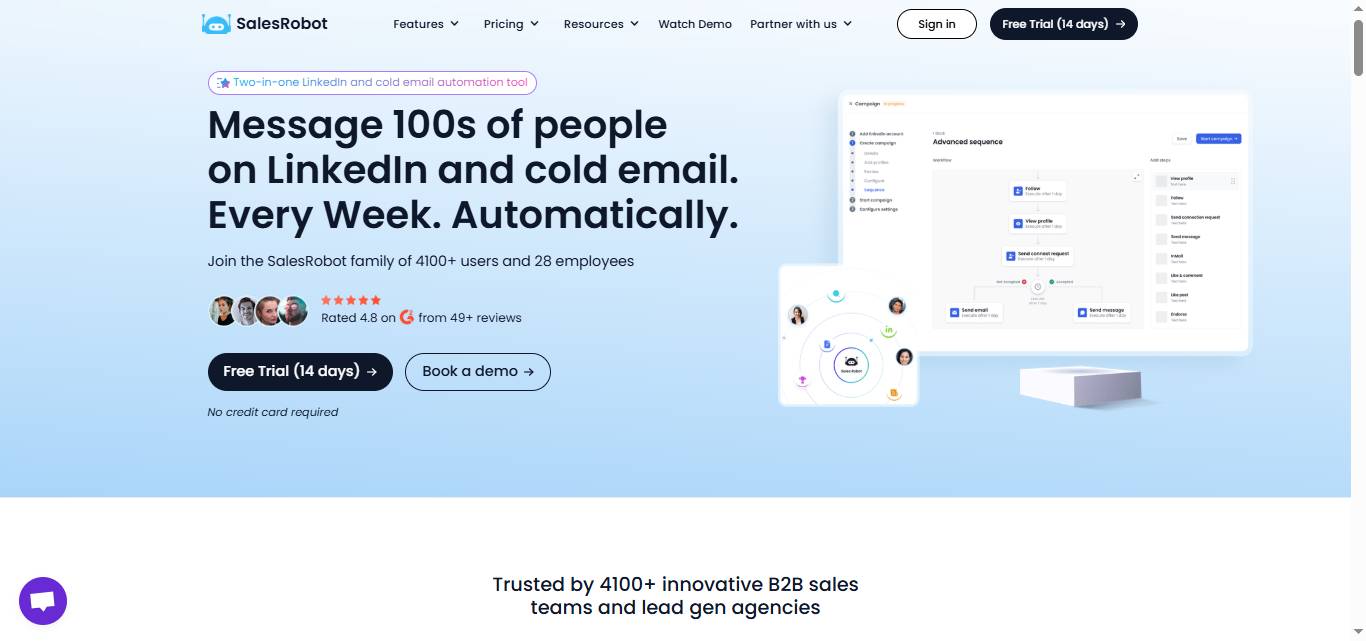
FullEnrich finds contact details. SalesRobot reaches contacts on LinkedIn.
Although it may seem like they do two completely separate tasks, the workflow pairing is straightforward.
FullEnrich takes a prospect list and returns verified work emails, personal emails, and phone numbers.
What it does not touch is the outreach itself, and specifically LinkedIn, which is where most B2B conversations begin in 2026.
For teams using FullEnrich to enrich email and phone data, SalesRobot adds the LinkedIn execution layer that FullEnrich was not designed to cover.
Import FullEnrich-enriched contact lists via CSV into SalesRobot and run automated, personalized LinkedIn connection request sequences to the same prospects in parallel with email outreach.
SalesRobot is a cloud-based LinkedIn and email automation platform built specifically for B2B outreach.
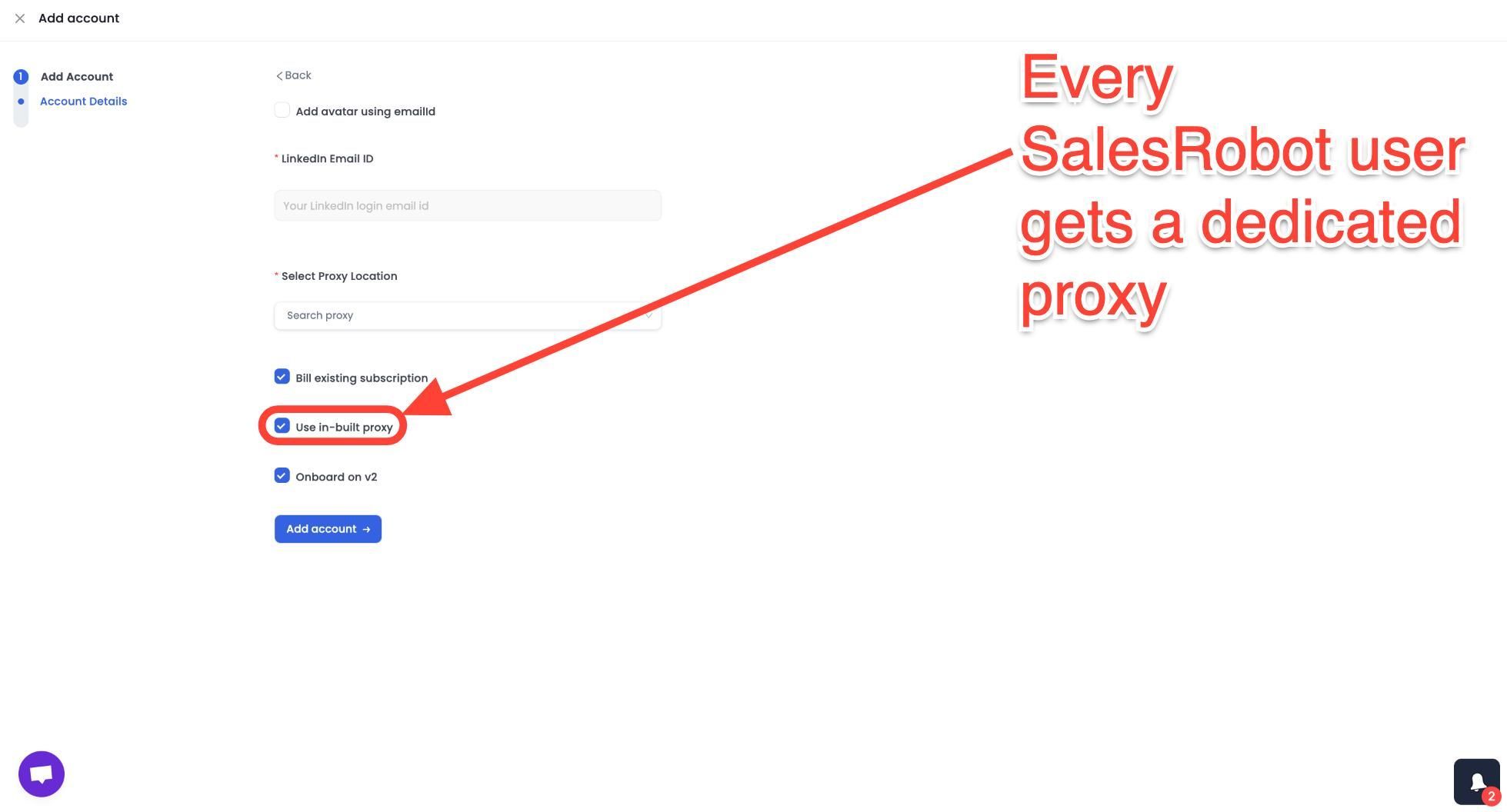
Mobile API Safety: Because SalesRobot connects through LinkedIn's mobile app APIs on the backend, your outreach activity mimics natural human behavior — reducing ban risk to roughly 0.00001%. It runs fully in the cloud 24/7 with no Chrome extension required, and includes dedicated local residential IP rotation per account.
Users consistently report running sustained, high-volume campaigns without account flags or restrictions, which is the single biggest operational concern with any LinkedIn automation tool.
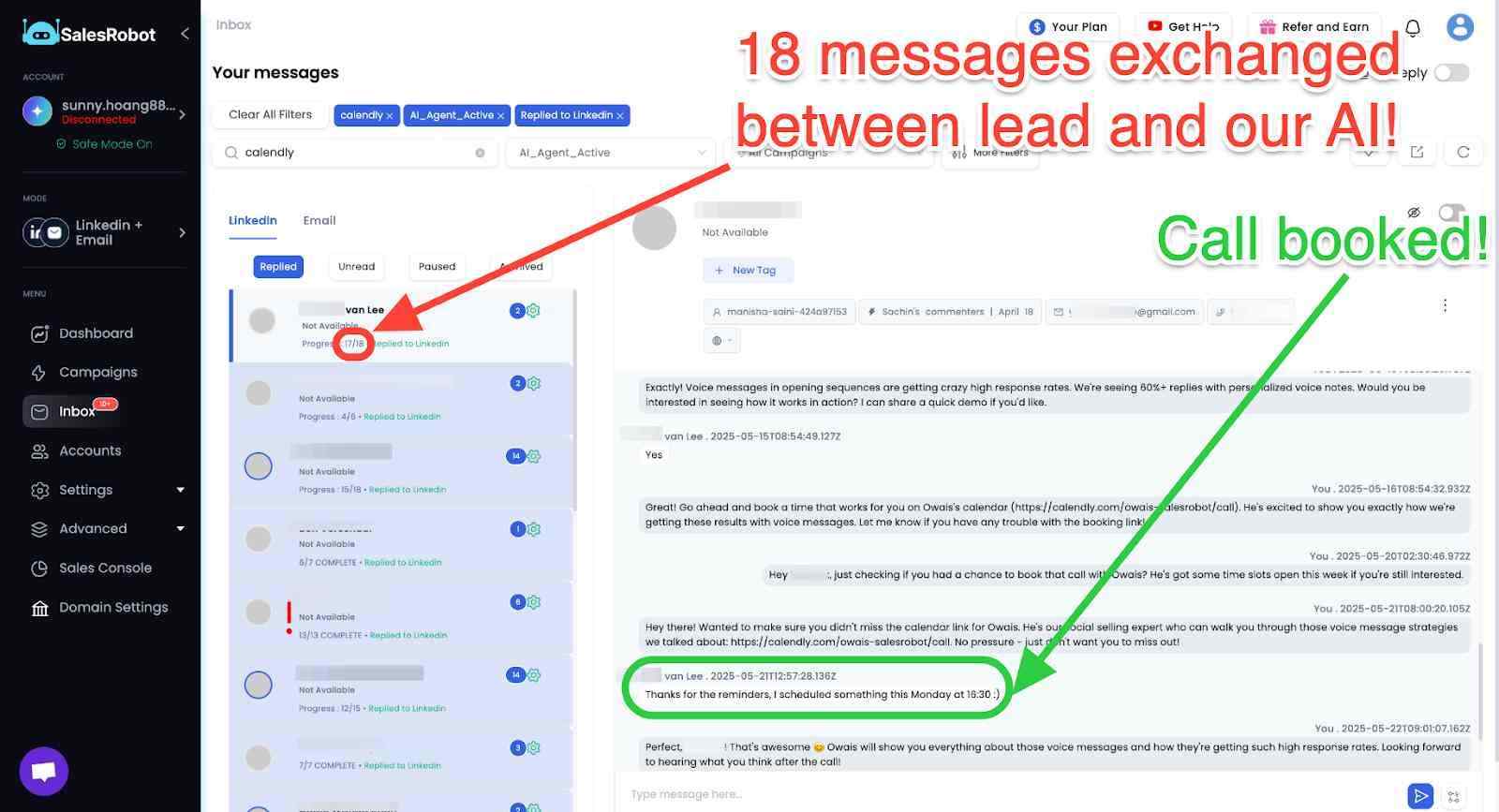
AI Appointment Setter: After a prospect replies, SalesRobot's AI Appointment Setter takes over the conversation instantly in the LinkedIn inbox, handles qualification questions, nurtures leads until they're ready, and books meetings automatically — responding within minutes, which matters because waiting longer than 5 minutes can cut conversion chances by 50%. It's fully trainable on your company, product, and tone, available as an add-on across all plans, and no other LinkedIn automation tool offers this natively.
You can train it on your specific criteria and ideal responses, which means the early-stage pipeline management largely runs without manual involvement. For smaller teams without a dedicated SDR, this is a meaningful capability.
AI Voice Clone and Video Messages: SalesRobot lets you send personalized voice notes and video messages through LinkedIn as part of automated sequences.
The AI Voice Clone feature lets you record a short voice sample once, then generates individualized voice notes for each prospect that sound like you, without recording each one manually — a unique SalesRobot capability that most competitors like Expandi, Waalaxy, and Dripify do not offer. Voice and video personalization is available on all paid plans (up to 50/day), and users report 40%+ reply rates on voice note campaigns.
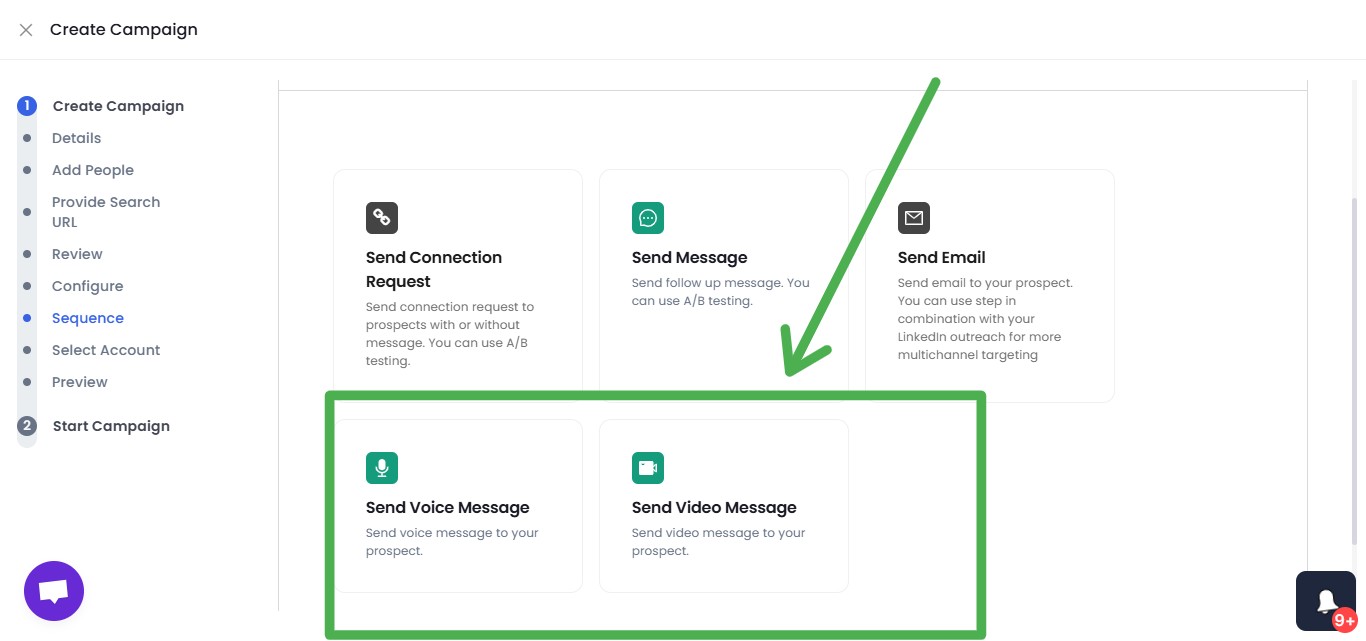
In sectors where relationships and trust matter, this kind of personal touch at scale tends to drive significantly higher reply rates than text-only outreach.
AI Variables and Hyper-Personalization: SalesRobot pulls data directly from a prospect's LinkedIn profile to write personalized message sequences automatically. You are not working from a static template that gets blasted to everyone.
Each message is adapted to the individual, which matters when you are reaching decision makers who see generic outreach constantly.
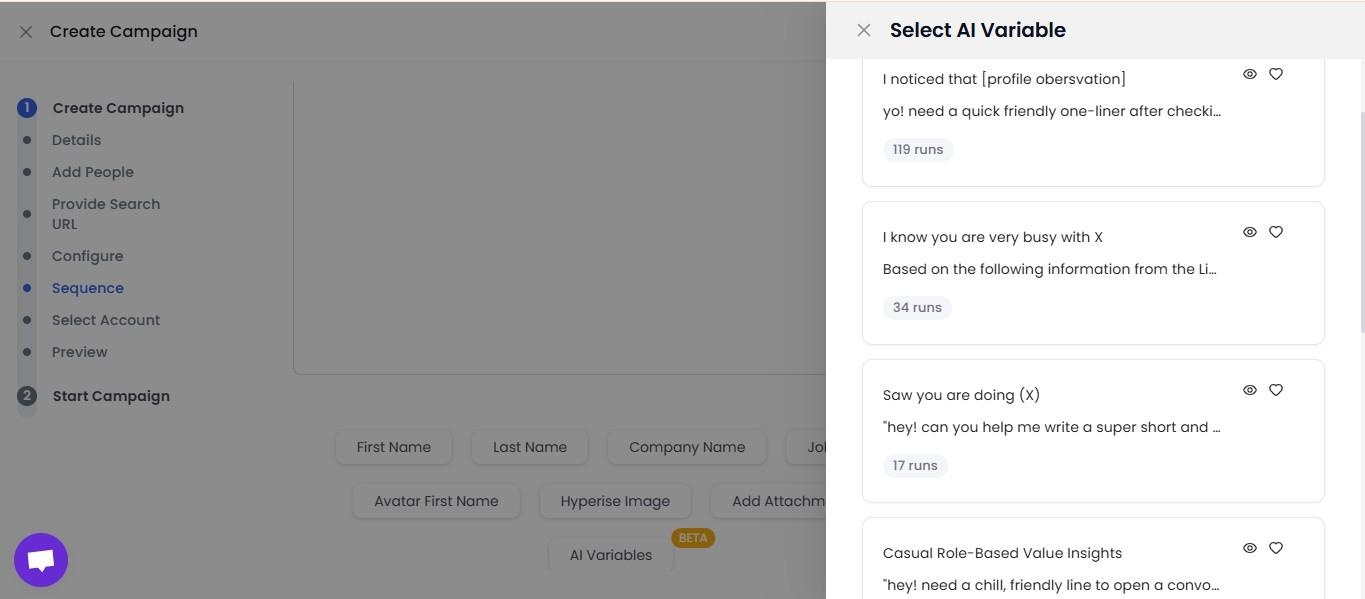
Multi-Step Sequences: You can build complex LinkedIn and email campaigns with smart delays and behavioral conditions. Leads can be imported from Sales Navigator, standard LinkedIn search, LinkedIn groups, event attendees, or CSV uploads, giving you flexibility in how you build and target your prospect lists.
Unified Inbox and Mini CRM: All LinkedIn and email conversations consolidate in one place with automatic reply detection. SalesRobot stops messaging automatically when a prospect responds, preventing the over-automation feel that kills conversations. You can tag leads, filter by interest level, and track where every prospect sits without switching between platforms.
Team Management and Analytics: For agencies or sales teams managing multiple LinkedIn accounts, SalesRobot tracks performance across accounts, prevents duplicate outreach between team members, and surfaces detailed analytics on what sequences and approaches are actually working.
SalesRobot pricing (per LinkedIn account, 14-day free trial, no credit card required):
- Basic: $59/month ($39/month billed annually).
- Advanced: $79/month ($59/month billed annually).
- Professional: $99/month ($79/month billed annually).
- Enterprise: Custom.
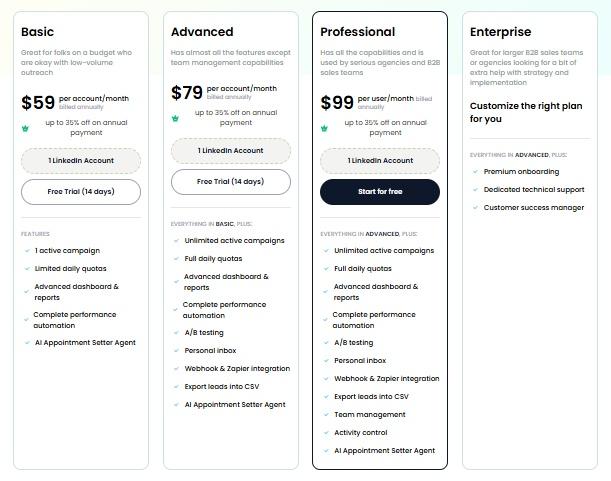
It also has a 4.8 rating on G2, with 50+ independent user reviews.
The Bottom Line
FullEnrich delivers on its core promise.
The waterfall across 20-plus providers genuinely finds more contacts than single-source tools, the pay-for-results pricing changes the effective cost math in the buyer's favor, and the triple verification including catch-all resolution consistently delivers lower bounce rates.
For international and EMEA enrichment in particular, it fills a coverage gap that US-centric alternatives leave open. The 4.8 G2 rating reflects real value delivered to teams with specific data coverage needs.
The limitations are worth understanding clearly before buying.
❌Phone numbers cost 10 times more credits than work emails, which demands careful plan sizing for call-heavy workflows.
❌The Chrome extension's LinkedIn functionality was disabled in June 2025 and has not been restored, which removes the in-workflow LinkedIn enrichment convenience that originally distinguished it.
❌And FullEnrich is enrichment only. The outreach tools, CRM, and LinkedIn automation still require separate subscriptions.
If LinkedIn outreach is part of how your team generates pipeline, SalesRobot fills that execution layer directly.
FullEnrich handles the contact data. SalesRobot handles the LinkedIn outreach and meeting conversion.
Both offer free access before any payment commitment, making a combined evaluation easy to run before committing to either.
Frequently Asked Questions
How much does a phone number cost on FullEnrich versus an email?
A verified mobile phone number costs 10 credits, while a verified work email costs 1 credit and a personal email costs 3 credits. Landlines and out-of-service numbers are returned free, and no credit is charged on failed lookups. This makes phone-heavy workflows burn credits roughly 10x faster than email-only.
Does the FullEnrich Chrome extension still work on LinkedIn?
No. FullEnrich disabled the extension's LinkedIn and Sales Navigator enrichment on June 16, 2025, to protect its relationship with LinkedIn. You can still enrich any LinkedIn profile by pasting its URL into the web app, uploading a CSV, or using the API and CRM integrations.
What happens to my unused credits at the end of the month?
Unused credits roll over for up to 3 months on monthly plans, capped at your monthly plan limit. On annual plans, all credits are allocated upfront and remain valid for the entire 12-month billing cycle.
Are credits charged if FullEnrich fails to find contact details?
No. FullEnrich follows a pay-for-results model. Credits are only deducted when a lookup successfully returns verified contact data. Unsuccessful queries cost zero credits.
Can multiple team members share a single FullEnrich plan?
Yes. All plans support unlimited users with no per-seat fees. Team members share a centralized credit pool within the workspace.
What native CRM and workflow integrations are supported?
FullEnrich integrates natively with HubSpot, Salesforce, Pipedrive, Clay, Google Sheets, Make, and n8n. You can also build custom workflows using their developer API.

Wow your leads by cloning yourself and sending personalized videos and voice notes to each lead on LinkedIn.
If you don't reply to leads within 5 mins, your chances of converting them fall by 50%. Our AI replies on your behalf instantly! (and yes, you can train it)

Don't shoot in the dark. Get detailed analytics on what's working
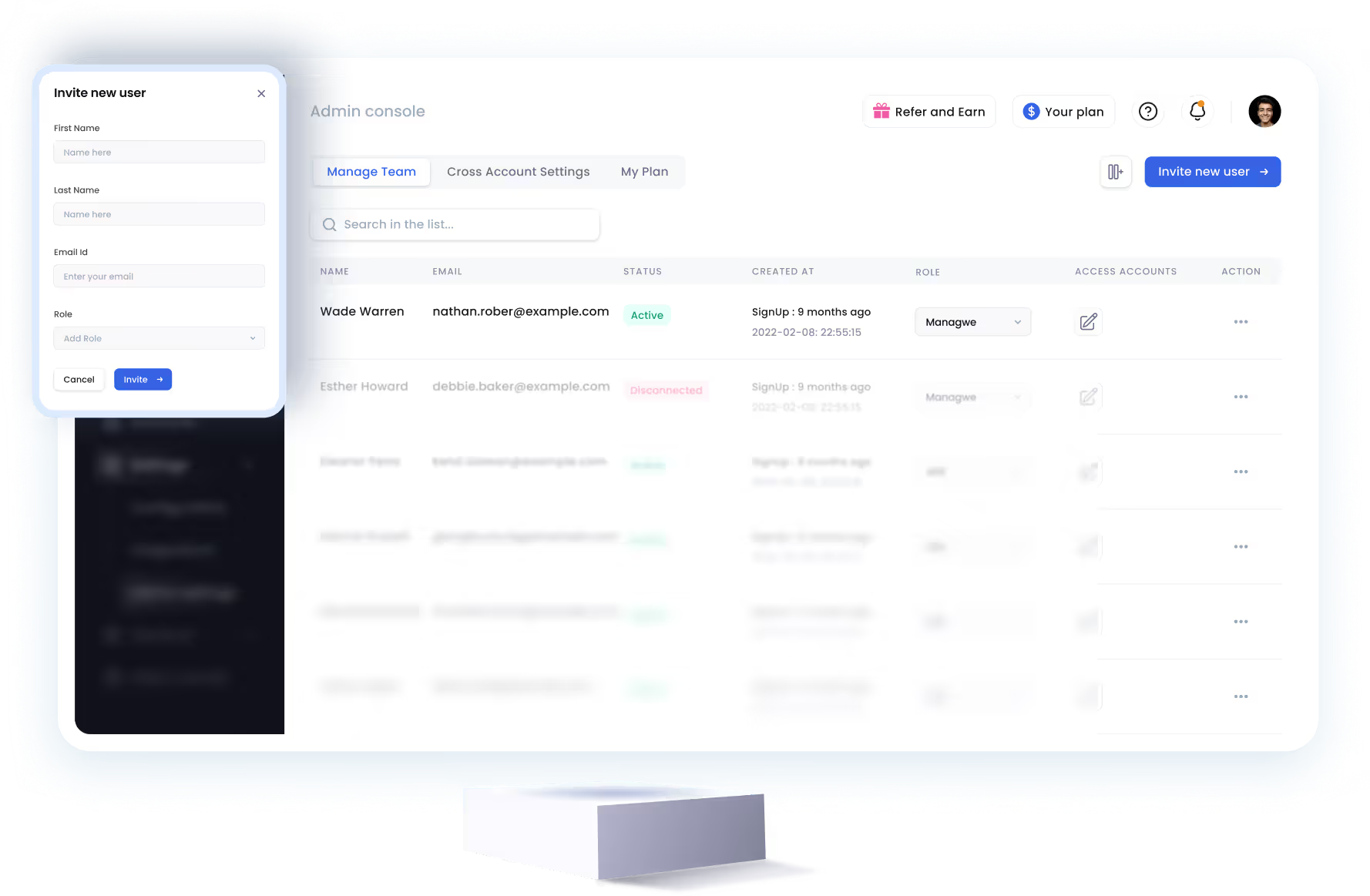
SalesRobot allows you to invite other team members, so that they can add their LinkedIn Account, run outreach campaigns and get amazing results just like you.
.avif)


Trusted by 4100+ innovative B2B sales teams and lead gen agencies

.avif)

.avif)




.avif)


Heading 1
Heading 2
Heading 3
Heading 4
Heading 5
Heading 6
Lorem ipsum dolor sit amet, consectetur adipiscing elit, sed do eiusmod tempor incididunt ut labore et dolore magna aliqua. Ut enim ad minim veniam, quis nostrud exercitation ullamco laboris nisi ut aliquip ex ea commodo consequat. Duis aute irure dolor in reprehenderit in voluptate velit esse cillum dolore eu fugiat nulla pariatur.
Block quote
Ordered list
- Item 1
- Item 2
- Item 3
Unordered list
- Item A
- Item B
- Item C
Bold text
Emphasis

Superscript
Subscript