.avif)
TL;DR
- Midbound sales converts observed intent signals (LinkedIn engagement, job changes, website visits) into timely, personalized outreach. It sits between reactive inbound and untargeted cold outbound.
- Cold email reply rates have collapsed from 8.5% in 2019 to 3.43% in 2026 (Instantly's 2026 benchmark report). Signal-based campaigns hit 15-25% reply rates in the same period.
- Among teams consistently crushing quota in 2026, the outreach split is roughly 70% signal-based and 30% cold (SpurIQ).
- The motion runs as a 4-step loop: Detect → Warm → Reach → Respond. Most teams skip Warm, which is exactly why their "personalized" outreach still reads cold.
- Honest caveat: midbound costs more than it returns at sub-$1K deal sizes, where broad cold outreach plus self-serve still wins.
- Choose pure cold outbound for sub-$1K deals or net-new ICP testing; choose midbound for everything else. Run the LinkedIn half of it with SalesRobot (55% average reply rate across 4,100+ teams).
- 👉 Skip the manual warm-up: SalesRobot automates LinkedIn pre-outreach signals and turns intent into booked meetings. Try free for 14 days.
Your Cold Outreach Is Hitting a 3.43% Reply Rate. There's a Reason.
In 2019, the average cold email got an 8.5% reply rate. By 2025 it was 5%. As of 2026, it's 3.43% (Instantly's 2026 Cold Email Benchmark Report).
That's not a dip. That's a collapse.
Meanwhile, waiting for inbound isn't an option either. Inbound typically surfaces only about 20% of a SaaS vendor's best opportunity base. The other 80% never fills out your form.
So you're stuck between a channel that's dying and a channel that's too small. Midbound sales is the answer to that exact squeeze: you still initiate contact, but only with people who've already shown a detectable signal of interest.
One quick disambiguation before we go further: Midbound is also the name of a startup (Midbound.ai, a website visitor identification tool founded in 2024). This guide covers the strategy, not the product, though the product makes a cameo later.
Here's everything that actually matters about Midbound in 2026: what it is, the numbers behind it, how to run it, and when to skip it.

What Is Midbound Sales? (The 60-Second Definition)
Midbound sales is an outreach strategy that converts observed intent signals (content engagement, profile views, job changes, website visits) into timely, personalized outreach. It sits between reactive inbound (waiting for prospects to raise their hand) and untargeted cold outbound (contacting strangers with no evidence of interest).
Think of it as a three-zone spectrum.
Cold outbound: you initiate, with zero signal. Inbound: they initiate, and you respond. Midbound: you initiate, but only after a signal tells you this person is warm, in-market, or fit-triggered.
The defining trait isn't the channel or the message template. It's the trigger. A midbound message exists because of a specific observable event: someone changed jobs, engaged with your content, or visited your pricing page.
In practice, that means your sequence doesn't start with "Hi {{first_name}}, I noticed you work at {{company}}." It starts with "Saw your post about migrating off HubSpot. That middle stage is brutal."
Tools like SalesRobot automate the LinkedIn-signal layer of this motion. More on that below.
Cold vs. Inbound vs. Midbound: What Actually Separates Them
Here's the Three-Motion Model, the cleanest way to see where midbound fits:
Two clarifications that trip people up.
Midbound is not just "warm outbound." Warm outbound is a temperature description; midbound is a motion design choice. Your entire detection, warming, and outreach workflow is built around signals, not lists.
Midbound is not ABM. ABM operates at the account level. Midbound operates at the person level, and that matters more than ever, because buying committees now average 6.3 stakeholders per deal (Expandi's Q1 2026 State of LinkedIn Outreach, analyzing 70,130+ campaigns). You're not warming an account. You're warming six people.
What Counts as a Midbound Signal in 2026?
Not all signals are equal. As of 2026, practitioners work with four categories:
1. Behavioral signals: LinkedIn post engagement, profile views, content likes and comments.
For example, you could pull everyone who commented on a competitor's product announcement and sequence them with a message referencing that exact thread.
2. Event signals: job changes, funding rounds, new hiring patterns.
A VP of Sales who started a new role 30 days ago is rebuilding their stack. That's a midbound trigger, not a coincidence.
3. Intent signals: website visits, deanonymized via visitor-ID tools like Midbound.ai or Leadpipe.
Someone who hit your pricing page twice this week didn't fill out a form, but they told you something anyway. (Vendor stat worth knowing: these tools claim 97% of website visitors leave unidentified.)
4. Relationship signals: shared connections, group membership, past interactions.
A second-degree connection who's in the same LinkedIn group converts very differently from a true stranger.
Prioritization rule: buying-intent signals (pricing page visit) outrank awareness signals (liked a post). A like tells you they're aware. A pricing page visit tells you they're shopping.
Reading these signals manually is a part-time job. This is where SalesRobot's AI Variables feature earns its keep. It automatically pulls relevant information from each prospect's LinkedIn profile, including recent job changes, company news, and shared connections, and uses it to personalize outreach. The signal becomes the opening line, at scale.
The Numbers Behind Midbound in 2026 (Date-Stamped)
Every claim here is anchored to a 2025-2026 source. Lift freely.
- Cold email average reply rate: 3.43%, down from 8.5% in 2019 and 5% in 2025 (Instantly 2026 Cold Email Benchmark Report; top campaigns exceed 10%).
- Signal-based campaign reply rates: 15-25% when targeting prospects showing buying intent.
- Warm outbound sequences average 15-22% reply rates, versus 3-8% for cold.
- SalesRobot users average a 55% reply rate on signal-driven LinkedIn outreach, with The Growth Agency hitting 66% in its case study. Against a 3.43% cold baseline, that's the gap midbound exists to close.
- First response now takes an average of 4.8 touches; booking a meeting takes 7.4 (Outreach Icebox, 2026).
- Multichannel sequences (email + LinkedIn + phone) outperform email-only by over 287%.
- Buying committees average 6.3 stakeholders per deal (Expandi, Q1 2026, 70,130+ campaigns analyzed).
- Quota-crushing teams run roughly 70% signal-based, 30% cold (SpurIQ, 2026).
The honest counterweight: at sub-$1K deal sizes, signal-based motions cost more than they return. Broad cold outreach paired with a self-serve funnel is more efficient there.
The pattern across every dataset is the same: volume without signal is dying, and signal without timing is wasted.
How to Run a Midbound Motion: The 4-Step Loop
Here's the Midbound Loop, the executable version of everything above.
Step 1: Detect
Identify the signal: a job change, a post like, a site visit, a shared connection.
In practice, that means setting up monitoring before writing a single message. A Sales Navigator saved search for job changes, a visitor-ID pixel on your site, or alerts on prospect content activity.
Step 2: Warm
Engage before pitching. Comment on their post. React to their content. Get on their radar so your name isn't a stranger's name when the connection request lands.
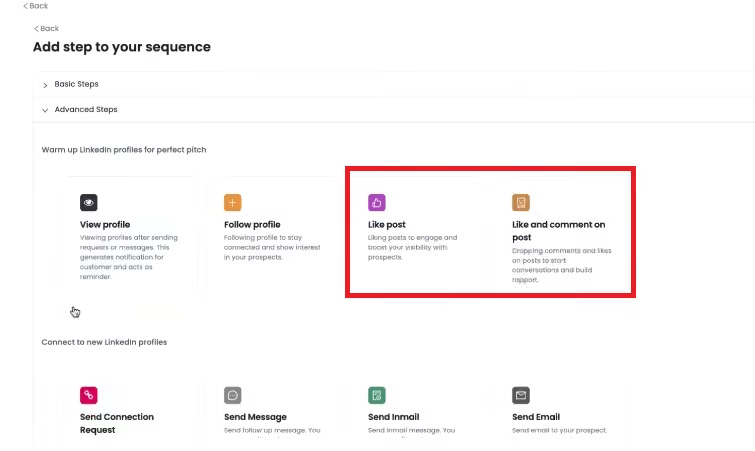
This is the step almost everyone skips, and it's why their "personalized" outreach still gets ignored. SalesRobot's Smart Comments automates it: AI-generated, contextually relevant comments land on prospect LinkedIn posts before outreach begins, warming prospects and lifting connection acceptance rates.
Step 3: Reach
Send the timed, signal-referencing message. The opener names the observed signal, not "I came across your profile."
In practice, that means SalesRobot's AI Variables writing the personalization from the prospect's actual LinkedIn data, so a 500-person campaign doesn't read like a 500-person campaign. SalesRobot users see a 51% connection acceptance rate with this approach.
Step 4: Respond
Handle replies with context, not a generic drip. With first responses averaging 4.8 touches, your follow-up game decides the outcome.
In practice, that means multichannel: SalesRobot drip campaigns start on LinkedIn (connection request → message → follow-up) and automatically switch to email if the prospect goes quiet, which matters when multichannel sequences outperform email-only by 287%.
Honest scope note: under 50 prospects per week, you can run this loop manually. At 200+ per week, each step needs automation. Otherwise your "midbound motion" quietly collapses back into regular outbound with extra steps.
How SalesRobot Automates the LinkedIn Half of Midbound
Let's be precise about what goes where.
SalesRobot is not a visitor-ID tool. Detection-layer tools like Midbound.ai and Leadpipe tell you who's showing intent on your website.
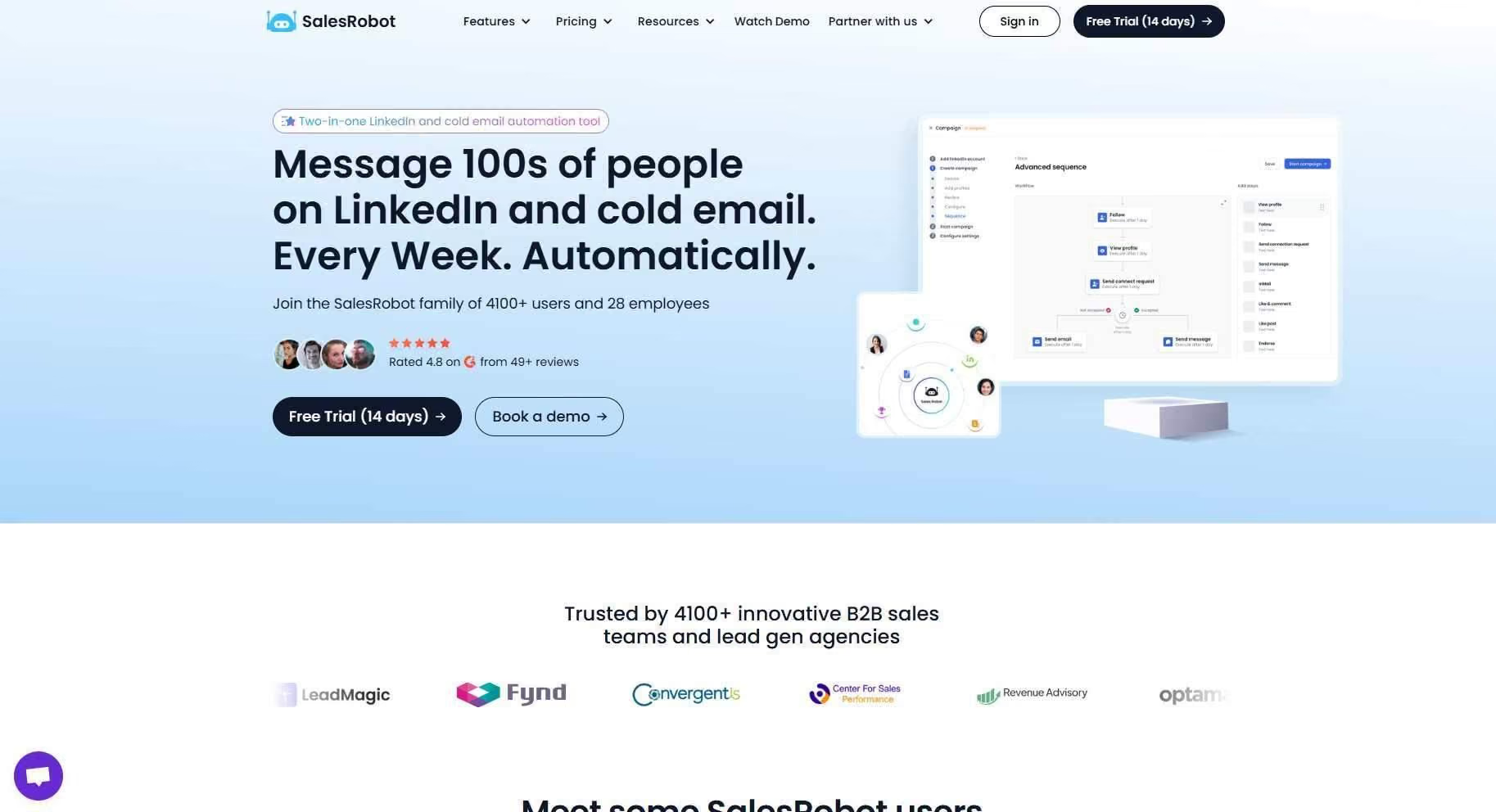
SalesRobot handles Warm, Reach, and Respond on LinkedIn, the execution half of the loop. The two are complements, not competitors.
Three capabilities map directly to the loop:
Smart Comments (Step 2: Warm). SalesRobot automatically leaves AI-generated comments on prospect LinkedIn posts before outreach begins. Your prospect sees your name twice before your connection request arrives, which is most of what "warm" actually means.
AI Variables (Step 3: Reach). Personalization auto-pulled from each prospect's LinkedIn profile: recent job changes, company news, shared connections, even volunteer work. The opening line references the actual signal, not a mail-merge field.
![SalesRobot campaign creation interface with an arrow pointing to "AI Variables" and a text field showing "[[I noticed that [profile observation]]]](https://cdn.prod.website-files.com/689b0a925ba9773f34278e0e/6a58bfa1dcd395e857fccf04_compressed_004.avif)
AI Appointment Setter (Step 4: Respond). Two modes: Copilot reviews conversations and suggests personalized replies you approve with one click; Autopilot manages entire conversations hands-off, handling objections, qualifying leads, and booking meetings into your calendar 24/7.
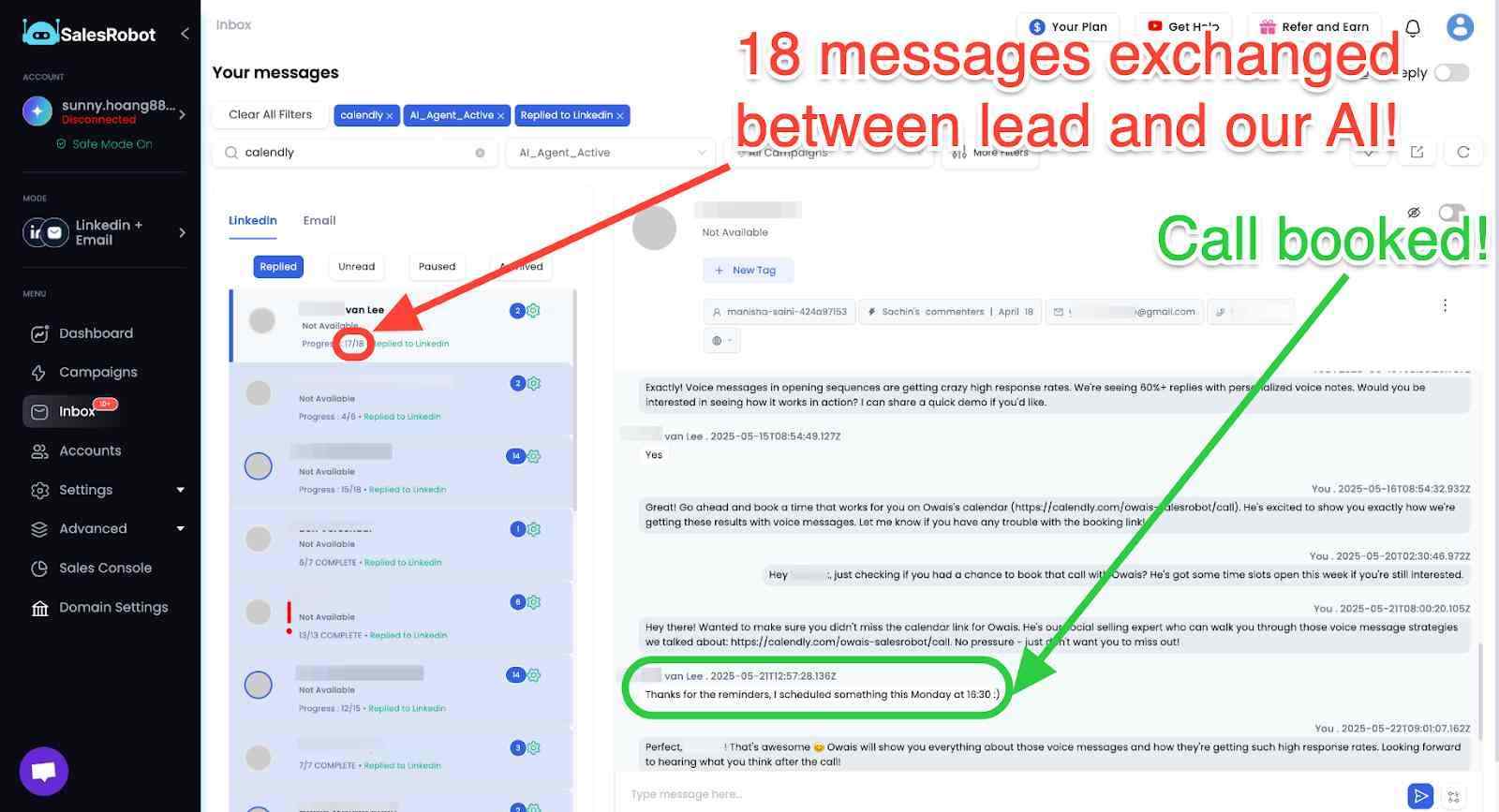
Safety, since automation makes people nervous: SalesRobot runs on mobile API technology with randomized delays, human-like limits (up to 200 connection requests/week), and residential IP rotation.
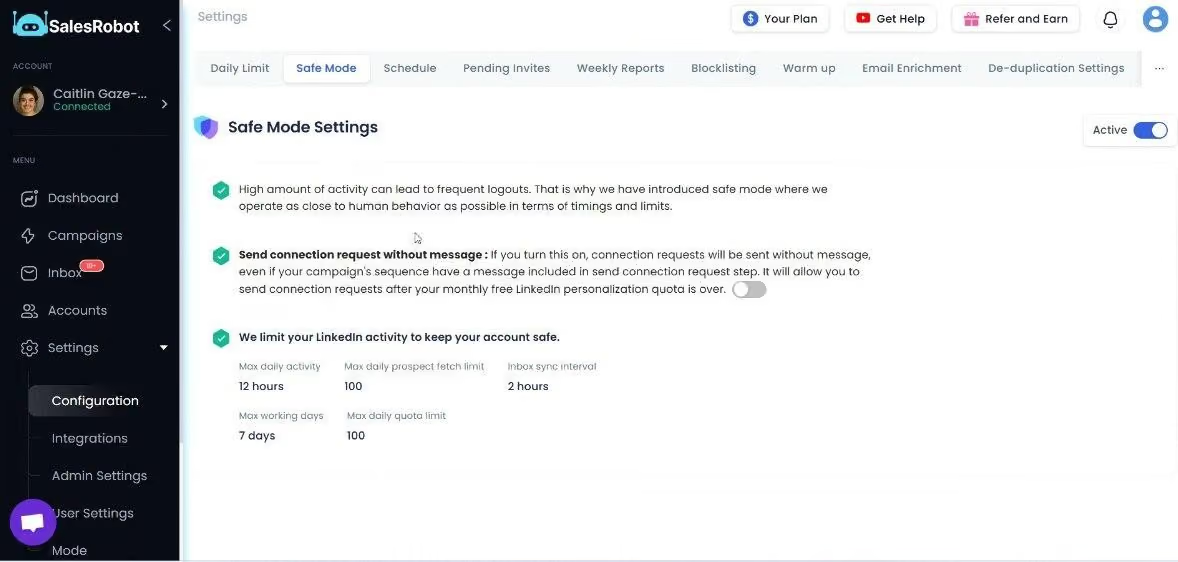
Customers report zero account bans when following Safe Mode guidelines, and it's cloud-based. No browser left running overnight.
The results across 4,100+ B2B sales teams: a 55% average reply rate, against the 3.43% cold email baseline.
Pricing starts at:
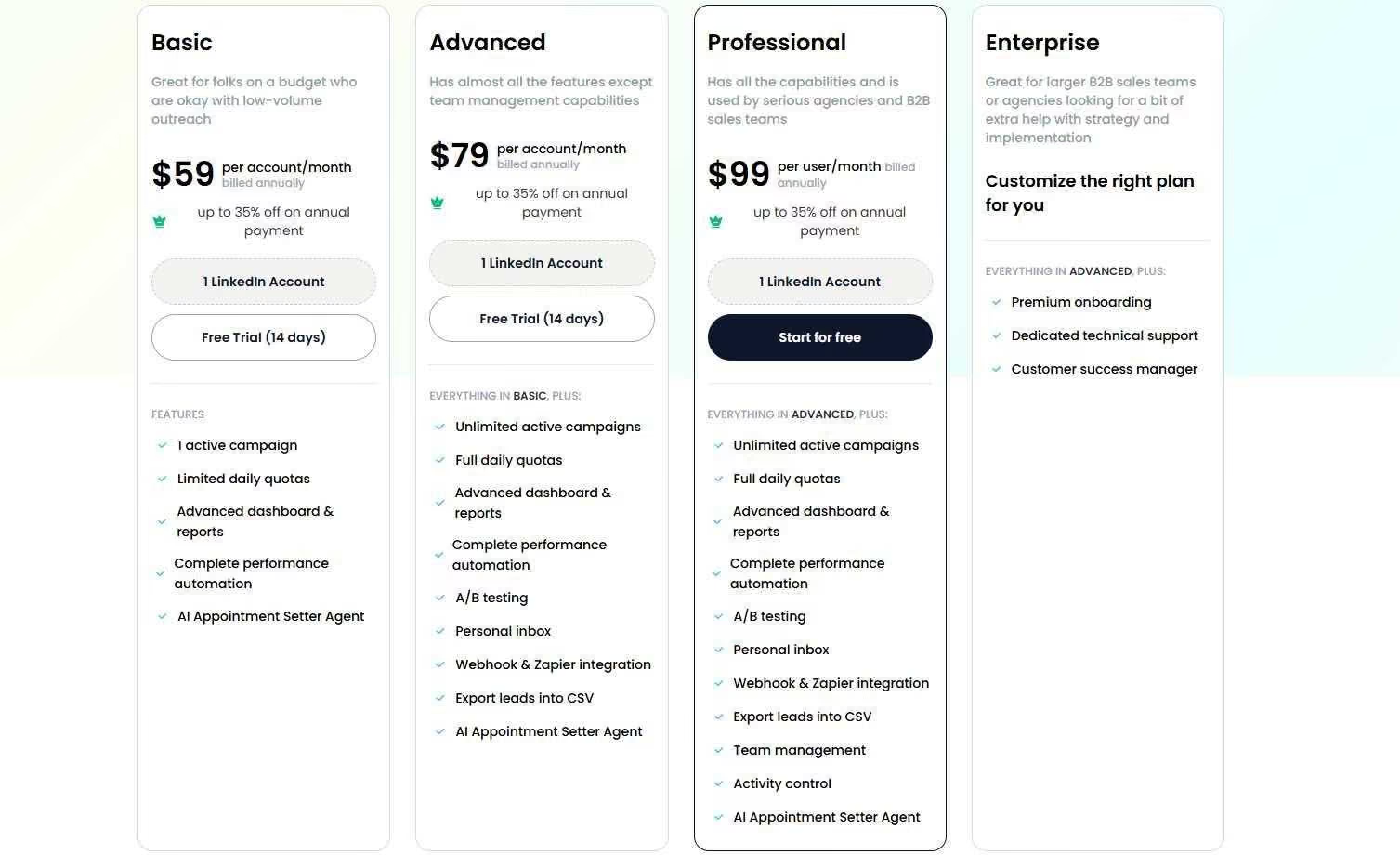
$59/month (Starter), with Advanced at $79 and Professional at $99. Annual billing saves 35%. There's a 14-day free trial, no credit card required.
When Midbound Doesn't Make Sense (Be Honest About the Tradeoffs)
Midbound isn't a religion. Three scenarios where it loses:
1. Sub-$1K ACV or self-serve deals. The economics don't work. Signal detection and warming cost more than the deal returns. Broad cold outreach feeding a self-serve funnel is more efficient here.
2. Net-new ICP discovery. If you don't yet know who your buyer is, you don't know which signals to filter for. Cold volume is genuinely useful as a learning mechanism. Remember, even quota-crushing teams keep 30% of their motion cold, and that 30% is intentional.
3. Low-signal markets. B2C, very small businesses, or industries with no LinkedIn presence simply don't generate enough detectable signals to fuel the loop. You can't run signal-based outreach where there are no signals.
And one uncomfortable truth: midbound is a sequencing discipline, not a magic fix. If your message is weak, warming up a prospect just means they reject you with more context.
Frequently Asked Questions
What is midbound sales?
Midbound sales is an outreach strategy that converts observed intent signals (LinkedIn engagement, job changes, website visits) into timely, personalized outreach. It sits between inbound (waiting for hand-raises) and cold outbound (contacting strangers). You initiate contact, but only after a detectable signal. Tools like SalesRobot automate the LinkedIn execution layer.
Is cold outreach dead in 2026?
No, but pure cold is collapsing. Average cold email reply rates fell from 8.5% in 2019 to 3.43% in 2026 (Instantly benchmark). Signal-based campaigns hit 15-25%, and well-run midbound motions on LinkedIn, like SalesRobot users' 55% average reply rate, show the gap. Cold survives as roughly 30% of top teams' mix.
What is signal-based outbound, and is it the same as midbound?
Signal-based outbound is outreach triggered by real-time events (a job change, funding round, or website visit) indicating an active need. Midbound and signal-based outbound describe essentially the same motion. "Midbound" emphasizes its position between inbound and outbound, while "signal-based" emphasizes the trigger mechanism. In practice, the terms are interchangeable.
What's the difference between midbound and inbound marketing?
Inbound waits for prospects to explicitly raise their hand: filling a form, requesting a demo. Midbound doesn't wait. You initiate contact, but only with people showing detectable intent or fit signals. Inbound captures the roughly 20% of opportunities that self-identify; midbound proactively reaches the rest before they ever convert on your site.
Do you need to choose between inbound and outbound sales?
No, and midbound is the proof. The strongest 2026 motions blend all three: inbound captures hand-raisers, midbound converts signal-showing prospects, and a small cold layer tests new markets. Multichannel sequences combining email and LinkedIn outperform email-only by over 287%, which is why blended motions like SalesRobot's LinkedIn-to-email handoff win.
What's a good reply rate for outreach in 2026?
As of 2026, the average cold email reply rate is 3.43%, with top campaigns exceeding 10% (Instantly benchmark). Signal-based campaigns targeting buying intent reach 15-25%. On LinkedIn specifically, SalesRobot users average 55% reply rates with signal-driven, personalized outreach. The Growth Agency case study hit 66%. Anything above 15% means your signals are working.
Where to Start With Midbound (Mapped to Your Situation)
The core takeaway: stop choosing between waiting for inbound and spraying cold. Convert signals into timed outreach instead. That's the whole strategy.
Your starting point depends on where you sit:
"I run cold outbound today and it's dying." Start with Step 2 (Warm). Add LinkedIn comment-warming to your existing list before your next sequence fires. It's the highest-leverage single change you can make.
"I have inbound traffic but most visitors ghost." Pair a visitor-ID tool (Midbound.ai, Leadpipe) with a signal-triggered LinkedIn sequence. Detection plus execution, stitched together.
"I'm an agency running campaigns for clients." Midbound at scale means automating Warm + Reach + Respond across every client account. SalesRobot's team dashboard runs campaigns across 50-100+ LinkedIn accounts from one login. It's how agencies like GrowRevenue Media (50+ accounts) and The Growth Agency (66% reply rate) operate.
One honest reality check: a proper midbound motion takes 2-3 weeks to set up. Signal monitoring, warming cadence, sequence logic. It's not a same-day fix, and anyone selling it as one is selling you cold outreach in a trench coat.
But once the loop runs, the math is hard to argue with: 3.43% cold versus 55% signal-driven.
SalesRobot automates the LinkedIn half. Smart Comments for warming, AI Variables for signal-referencing personalization, and the AI Appointment Setter for booking meetings while you sleep. Plans start at $59/month.
Start your 14-day free trial, no credit card required.

Wow your leads by cloning yourself and sending personalized videos and voice notes to each lead on LinkedIn.
If you don't reply to leads within 5 mins, your chances of converting them fall by 50%. Our AI replies on your behalf instantly! (and yes, you can train it)

Don't shoot in the dark. Get detailed analytics on what's working
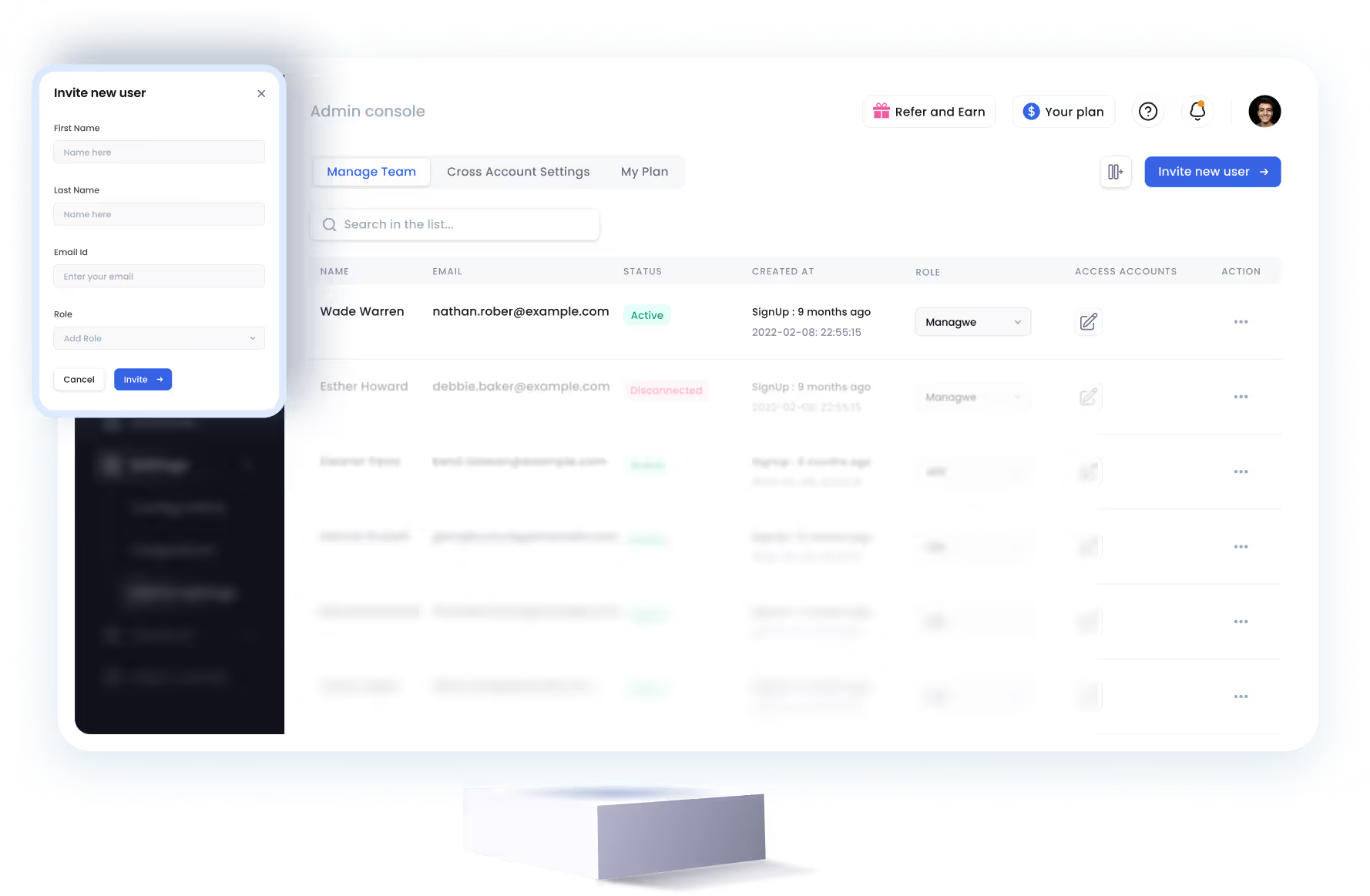
SalesRobot allows you to invite other team members, so that they can add their LinkedIn Account, run outreach campaigns and get amazing results just like you.
.avif)


Trusted by 4100+ innovative B2B sales teams and lead gen agencies

.avif)

.avif)



.avif)

Heading 1
Heading 2
Heading 3
Heading 4
Heading 5
Heading 6
Lorem ipsum dolor sit amet, consectetur adipiscing elit, sed do eiusmod tempor incididunt ut labore et dolore magna aliqua. Ut enim ad minim veniam, quis nostrud exercitation ullamco laboris nisi ut aliquip ex ea commodo consequat. Duis aute irure dolor in reprehenderit in voluptate velit esse cillum dolore eu fugiat nulla pariatur.
Block quote
Ordered list
- Item 1
- Item 2
- Item 3
Unordered list
- Item A
- Item B
- Item C
Bold text
Emphasis

Superscript
Subscript