.avif)
TL;DR
- LinkedIn authority building is not about followers. It's about what happens in the 3 seconds a prospect spends on your profile before deciding to reply (or not).
- Your headline, banner, and featured section do more for your reply rate than any message template ever will.
- Posting without a point of view doesn't build credibility. Contrarian takes, build-in-public content, and micro-proof posts do.
- Your warmest outreach list already exists. It's the people who liked and commented on your posts. SalesRobot can scrape them and put them into a campaign automatically.
- The warm-touch sequence (profile view → like → comment → connect) makes you familiar before you ask for anything.
- SalesRobot's AI Variables pull each prospect's recent posts and activity so your first line actually references something real.
Warm list plus personalized opener is what gets 50%+ reply rates.
Your copy might not be the problem…
You've rewritten that connection note 4 times.
Tested three different subject lines.
Tried shorter, tried longer, tried adding a compliment at the top.
And the reply rates are still at 5%
Here's what's actually going on.
Before a prospect reads your “UNIQUE” DM, they've already clicked on your profile.
They've scanned your headline and your last post.
That takes about 3 seconds, and by the time they look back at your message, the decision is mostly made.
LinkedIn's algorithm has made this worse. Your connection acceptance rate now directly controls how many people you can reach each week.
A profile that looks empty or generic tanks that rate, which tanks your reach, which tanks everything downstream.
The good news: fixing the context around your message is faster than most people think. And when you do it right, the same message you've been sending starts getting very different results.
What Does LinkedIn Authority Actually Mean in 2026?
LinkedIn authority is the answer to one question a prospect asks when they land on your profile: "Is this person worth the trust?"
If the answer is obvious in 3 seconds, they reply. If they have to work for it, they don't.
Authority in 2026 comes from three things working together: a profile that clearly signals who you help, content that shows how you think, and enough visible activity that you don't look like a ghost account sending automated messages.
You don't need 10,000 followers for this. Barney Abramson had 7,000 when he started using his LinkedIn presence as an outreach engine, and those weren't even the right 7,000. We'll get to his story in a bit.
Is Your Profile Working For You or Against You?
Think of your LinkedIn profile as the landing page your outreach sends people to.
Every message you send drives traffic to it. The question is whether that page converts or kills the deal.
The headline is where it starts.
"CEO at Acme Corp" tells someone what you are. "Helping B2B agencies close more clients with LinkedIn outreach" tells them what you do for people like them. One of these makes a prospect lean in. The other makes them move on.
The shift is from "who I am" to "who I help." It sounds small. The effect on acceptance rates isn't.

The banner is free real estate almost everyone wastes.
It's the first visual element on your profile and it's usually either blank or a generic stock photo.
Use it to reinforce your positioning.
A simple text-based banner that echoes your headline already puts you ahead of 90% of the profiles in any prospect's inbox.

The featured section is your proof layer, not your link dump.
Two or three posts that show real results or a sharp point of view will do more here than a list of links to your website. A screenshot of a result.
A post that got traction. A short clip. Something concrete that makes the next click feel worth it.
The goal isn't a polished LinkedIn profile for its own sake.
The goal is making sure that when someone clicks through from your message, they don't have to wonder why you reached out.

What Kind of Content Actually Builds Credibility?
Here's where a lot of people get stuck.
They know they should "post on LinkedIn" and they start doing it.
Tips, frameworks, "here's what I learned" posts..
But the engagement stays flat, and they give up after six weeks.
The problem is posting without a point of view.
Generic advice will OBVIOUSLY get buried between 100s of similar posts.
But your unique perspective will stand out if you do it correctly.
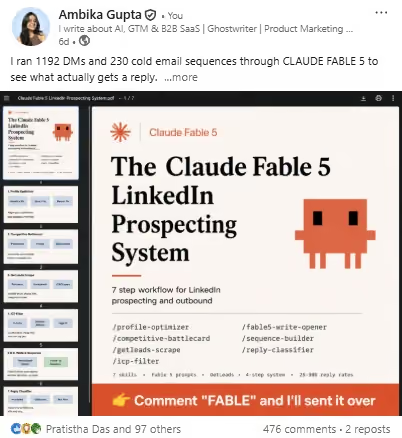
Look at this 👇

This post clearly shows the person’s unique perspective. And that’s what we want.
There's a real difference between "Personalize your outreach to get more replies" and "Personalization doesn't work if you're pulling from the same three data points as everyone else."
The second one gives someone a reason to pause.
The first one gets scrolled past.
Three content formats that actually performs WELL:
Contrarian takes. Challenge something your audience already believes. Not for the shock value, but because you genuinely see it differently. This is the fastest way to build recognition. People start to remember how you think, not just what you share.
Build-in-public posts. What's working, what isn't, what you're currently testing.

This is the content that builds trust fastest because it's specific and it's real. A post that says "we tried X, got Y result, here's what we'd do differently" is infinitely more credible than a post that says "5 tips for better outreach."
Micro-proof content. Short results, screenshots, small wins. You don't need a full case study. A single data point with context does the job. "Sent 200 connection requests this month, 51% accepted.
Here's the only thing that changed." That's a post. That's also proof.
On frequency: consistency beats volume. Posting twice a week with a real perspective outperforms posting every day with generic content. The algorithm rewards engagement, and engagement comes from saying something worth reacting to.
What If Your Best Outreach List Is Already on Your Profile?
Every post you publish creates a list of people worth reaching out to.
The ones who liked it, commented, shared it.
They've already seen how you think and they chose to engage.
When a connection request from you lands in their inbox, it feels familiar.
That's a completely different conversation to walk into compared to cold outreach.
SalesRobot can pull everyone who engaged with your posts straight into a campaign.
Point it at your post engagers, set up the sequence, let it run.
Reply rates on that list are higher than cold outreach because these people already have context on you.
That's what LinkedIn authority actually unlocks.
A warm list that grows every time you post something worth reacting to.
How Do You Warm Up a Prospect Before You Connect?
Even if someone hasn't seen your content, you can still show up as familiar before you send a connection request.
The warm-touch sequence looks like this:
View their profile → Like a recent post → Leave a short comment → Send the connection request
By the time your request arrives, your name has shown up in their notifications at least twice. You're not a stranger. You're someone they've seen around.
This matters because LinkedIn's connection acceptance rate is the metric that governs how many people you can reach every week.
Accepted connections from people who already recognize you push that rate up.
A high rate tells LinkedIn's algorithm you're a credible sender and expands your weekly sending capacity.
The problem with this sequence is the time it takes to do manually at any real scale.
SalesRobot automates it.
Profile views, post likes, comments, and connection requests can all be sequenced inside a campaign.
The activity looks natural because the timing is randomized and the daily limits stay within LinkedIn's safe thresholds.
One important detail: once someone replies, SalesRobot stops the sequence automatically.
How Do You Turn LinkedIn Authority Into Replies at Scale?

Here's where the two pillars connect.
You've built a profile that converts. You've been posting with a point of view. You have a warm list of people who've already engaged with your content, plus a pre-warm sequence running for cold prospects.
Now the message has to match the context.
This is where SalesRobot's AI Variables do the heavy lifting. Before sending a connection request or follow-up message, the AI reads each prospect's LinkedIn profile and pulls in recent posts, job changes, company news, and shared connections.
The first line of your message references something real and specific to that person.
Not "Hi [First Name], I came across your profile."
Something like: "Your post about that DM you received last week lol 😭 had me rolling. People really do send anything"
That's the combination that gets replies. A profile worth clicking on + content they may have already seen + a message that proves you actually looked.
SalesRobot customers average a 55% reply rate and 51% connection acceptance rate. The ones hitting the top of that range are almost always the ones running all three layers together.
When replies start coming in, SalesRobot's AI Appointment Setter handles the conversation in Copilot or Autopilot mode. Copilot suggests replies you approve with one click. Autopilot manages the full thread, handles objections, and books meetings directly into your calendar. You show up for the call.
And if you want to go further than text, personalized voice and video notes sent through SalesRobot get 3x the response rate of standard messages. You record once. The AI personalizes it for each prospect and sends it as part of your sequence.
What Should You Avoid?
A few things actively work against you here.
Posting without doing outreach. Content builds authority but it doesn't close deals on its own. The people engaging with your posts are warm. If you're not reaching out to them, you're leaving pipeline on the table.
Doing outreach without fixing the profile first. Sending 100 connection requests from a profile with a generic headline and no recent posts is why people get 15% acceptance rates and assume LinkedIn outreach doesn't work.
Treating follower count as the goal. Barney had 7,000 followers when his outreach started working. The number isn't the point. The engagement behind it is.
Skipping the warm-touch sequence. A cold connection request from someone with no profile activity gets filtered fast. Three small touches before the request can double your acceptance rate on the exact same message.
Frequently Asked Questions
How long does it take to build LinkedIn authority?
You can see meaningful improvement in your acceptance rate within two to three weeks of fixing your profile and running the warm-touch sequence. The content side compounds over time. A month of consistent, opinionated posting creates a visible body of work. Don't wait for authority to be "built" before starting outreach. Run both at the same time.
Do I need a large following to get good reply rates?
No. Barney Abramson was working with 7,000 followers, not 70,000. What matters is that the people following you have actually engaged with your content. 500 engaged followers who've commented on your posts are worth more as an outreach list than 10,000 passive ones.
How often should I post to build credibility?
Twice a week is enough if the posts have a real point of view. That's more than enough visible activity for a prospect scanning your profile to see you're active and have something to say. Posting every day with generic content does less for your authority than posting twice a week with an actual opinion.
Can I run outreach and build authority at the same time?
Yes, and you should. You don't need a perfect profile or 50 posts before you start outreach. Fix the headline and featured section first. That takes an hour. Then run outreach while you build the content layer in parallel. The two reinforce each other as you go.
How does SalesRobot help with LinkedIn authority building?
SalesRobot handles the outreach side of the equation while your authority compounds. It automates the warm-touch sequence (profile views, likes, comments, and connection requests), scrapes your post engagers into warm outreach lists, personalizes every message with AI Variables, and handles replies with the AI Appointment Setter. You focus on posting with a point of view. SalesRobot handles the rest.
Ready to Turn Your LinkedIn Authority Into Actual Replies?
Your profile is your sales page…
Your content is your warm-up…
And SalesRobot is what connects the two into a system that runs while you sleep.
76% of SalesRobot free trial users get their first lead within 2 days.

Wow your leads by cloning yourself and sending personalized videos and voice notes to each lead on LinkedIn.
If you don't reply to leads within 5 mins, your chances of converting them fall by 50%. Our AI replies on your behalf instantly! (and yes, you can train it)

Don't shoot in the dark. Get detailed analytics on what's working
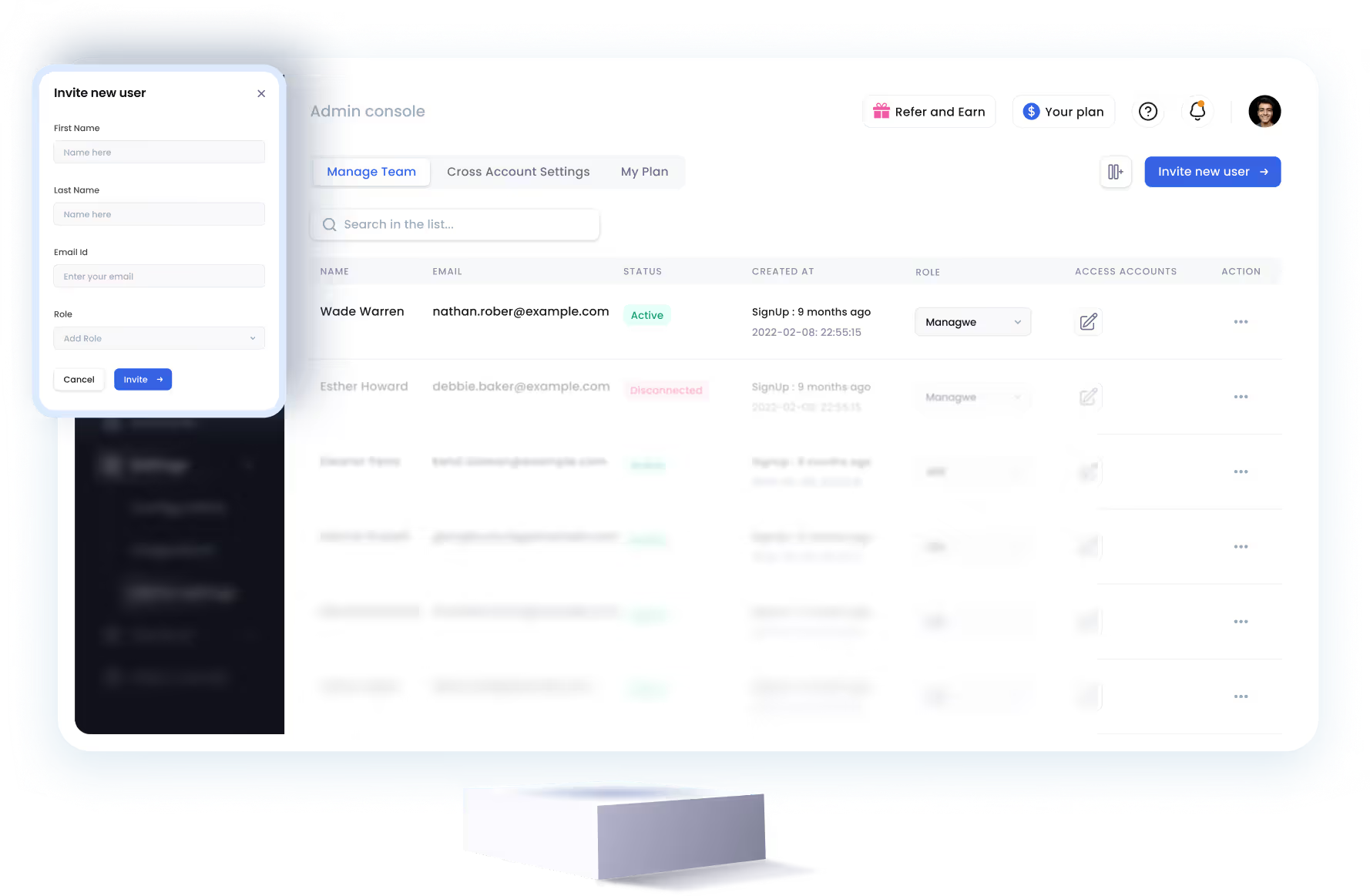
SalesRobot allows you to invite other team members, so that they can add their LinkedIn Account, run outreach campaigns and get amazing results just like you.
.avif)


Trusted by 4100+ innovative B2B sales teams and lead gen agencies

.avif)

.avif)



.avif)